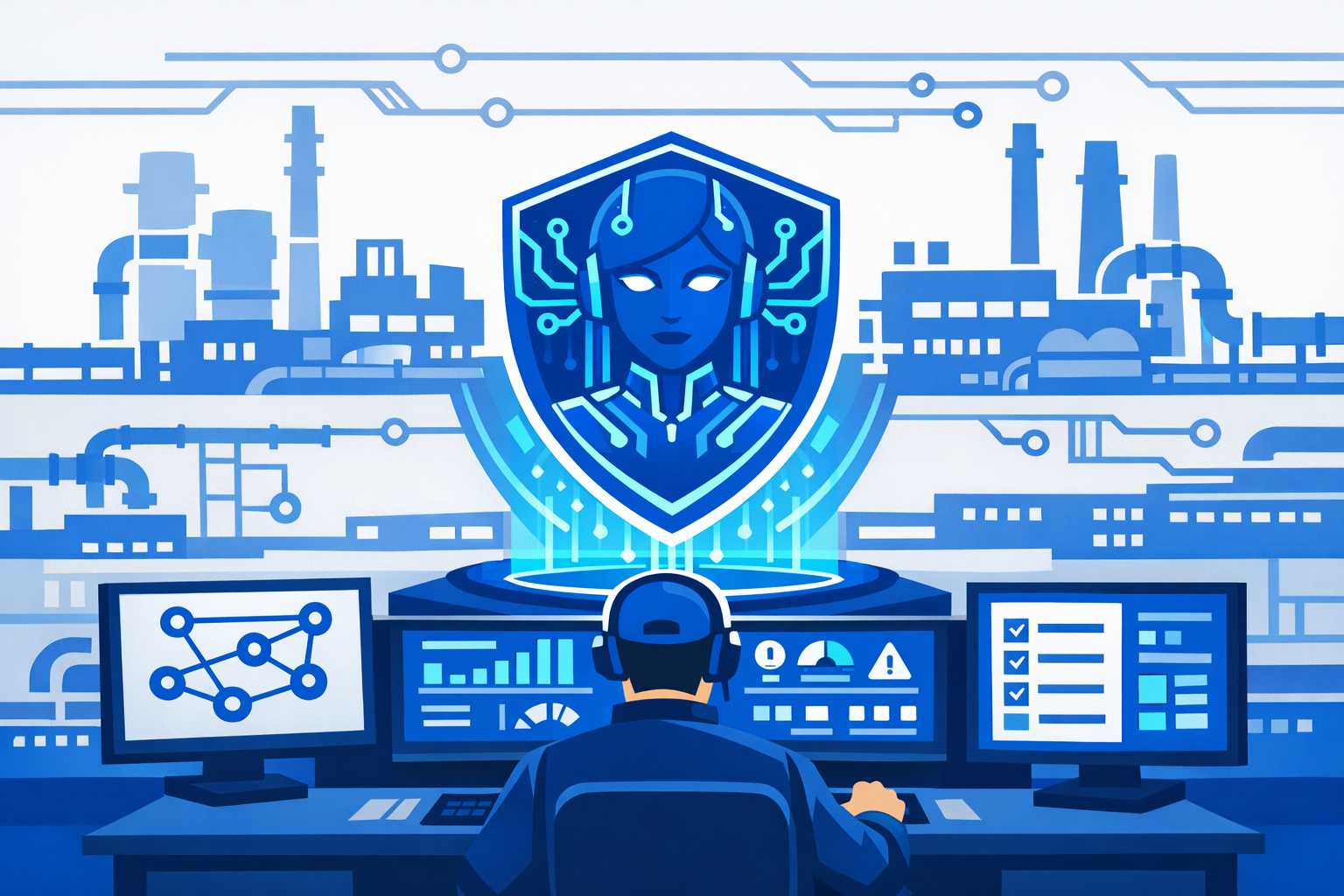
Claroty on Wednesday launched Claroty Claire, positioning it as the first cyber-physical systems (CPS)-native AI security agent designed to automate threat detection, exposure management, and compliance workflows across operational technology (OT), industrial control, and medical device environments.
Background
The rate at which AI is expanding the CPS attack surface has prompted vendors and operators to adopt more proactive measures. That dynamic sits alongside persistent structural gaps in OT visibility: a Claroty Team82 report found that 88% of CPS assets do not transmit an exact product code, and 76% use product codes that differ from the vendor's official records, according to the company. OT assets are built to last 10 to 15 years and are often insecure by design, with infrequent patches and updates confined to maintenance windows. Against that backdrop, a joint CISA-led guidance document on integrating AI into OT systems marked a pivotal moment in cyber governance, articulating a clear federal expectation that the security of critical infrastructure depends on rigorous, verifiable oversight - especially when introducing AI.
Details
Claroty described Claire as a CPS-native AI security agent designed to help organizations proactively defend mission-critical infrastructure with speed, accuracy, and focus. The agent is integrated into the Claroty Platform and draws on detailed data from more than 6,500 original equipment manufacturers and medical device makers, deployed across over 20,000 sites in more than 50 sectors and 60 countries, and enriched with threat intelligence from Claroty's Team82 research unit.
Claroty said Claire targets three core outcomes. Industry-specific agents from Claire aim to reduce risk by proactively prioritizing and orchestrating remediation of exposures, improve operational resilience through research-backed device understanding, and achieve continuous compliance by easing the manual burden of audit preparation through automated asset mapping to regulatory frameworks and OEM-approved patch levels.
CEO Yaniv Vardi framed the agent's design philosophy in terms of operator empowerment. "Organizations face pressure to embrace digital transformation and AI for efficiency and cost reduction, all while ensuring these tools safely improve resilience and preserve uptime," said Vardi. "This Herculean task is achievable when leveraging an AI tool that intrinsically understands the unique complexities of CPS environments and can balance security controls with operational needs. That's why we built Claire - to empower human operators to make decisions with confidence, based on tailored insights and agentic actions you can trust."
The company serves more than 1,300 customers, including 24 of the Fortune 100. Claroty has been named a Leader in the 2026 Gartner Magic Quadrant for CPS Protection Platforms for the second consecutive year and a Leader in the Forrester Wave: IoT Security Solutions, Q3 2025.
The launch raises governance questions that industry analysts and regulators have flagged repeatedly. Federal guidance from the NSA and CISA mandates human-in-the-loop controls for critical decisions affecting the physical environment, stating that AI should augment - not autonomously control - safety-critical actions, and that robust guardrails and manual override mechanisms must limit the potential consequences of AI failures. Industry practitioners have noted that governance frameworks must enable systems to enter a "deterministic safe state" - an automated, pre-authorized posture that protects physical equipment while humans oversee recovery - because waiting for a committee to authorize a shutdown when an adversary adapts at machine speed represents a failure mode.
Agencies have also recommended that OT organizations establish clear governance and assurance frameworks with accountability structures and embed failsafe practices that allow AI to "fail gracefully without disrupting critical operations," including the ability to bypass or disable AI quickly and revert to deterministic control. Claroty stated that Claire was developed with a focus on precision and operational integrity, trained on over a decade of domain expertise across the industrial, healthcare, commercial, and public sectors.
Outlook
Claroty plans to present Claire at the Gartner Security & Risk Summit, June 1-3, in National Harbor, Maryland. Operations leaders evaluating AI-assisted OT security at scale will need to assess how Claire's automated containment capabilities map to existing incident response plans, safety instrumented system (SIS) constraints, and applicable regulatory frameworks - including IEC 62443 and the NIST AI Risk Management Framework. AI-enabled systems in OT environments should include documented failure states and the ability to bypass or disable AI quickly, with operators retaining the option to revert to manual or deterministic control.