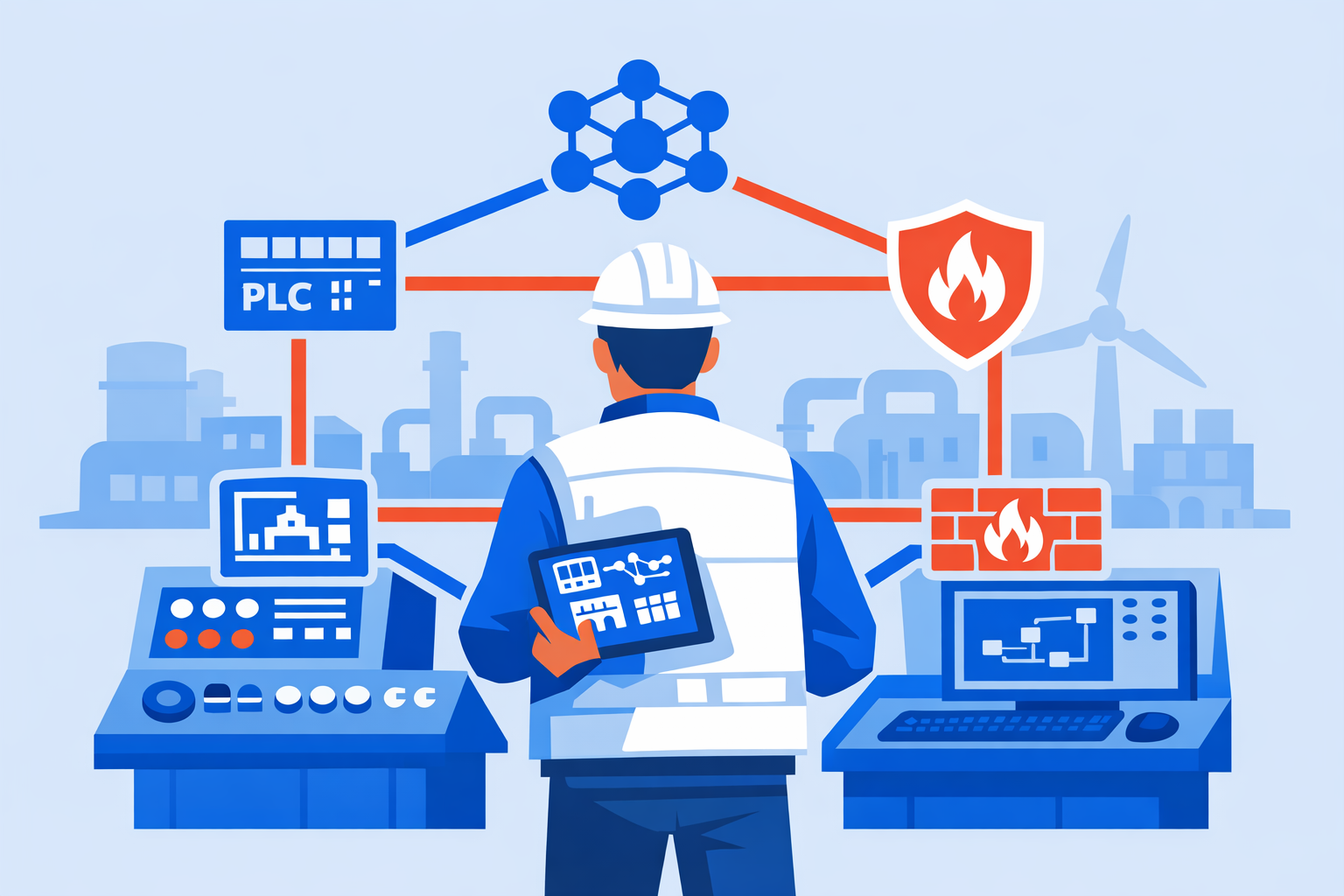
Manufacturers worldwide are shifting from legacy, on-premises Manufacturing Execution Systems (MES) to elastic, cloud-native architectures as pressure to unify operational technology (OT) and information technology (IT) environments intensifies - driven by AI integration, edge computing, and stricter data governance requirements.
Background
The MES market has historically been defined by isolated, on-premises deployments that created persistent data silos between shop-floor OT systems and enterprise IT layers. Traditional deployments often limited cross-functional visibility and complicated modernization efforts. That model is under sustained pressure: according to Rockwell Automation's 2025 State of Smart Manufacturing Report, 21% of manufacturing leaders cite integration challenges as a top internal obstacle.
Vendor activity in 2025 accelerated the pivot toward cloud-native platforms. Critical Manufacturing announced a partnership with Canonical in December 2025, combining MES expertise with trusted cloud infrastructure to enable scalable, secure, cloud-native manufacturing platforms. That same month, Rockwell Automation announced strategic innovations to its MES portfolio focused on flexibility, scalability, and resiliency. Earlier in the year, Critical Manufacturing acquired Convanit in July 2025, adding visual AI tools for no-code model training in image-based inspection and MES workflow integration.[1]
Market data reflects the structural shift: ABI Research forecasts global MES software spending growing at a 6.9% CAGR from 2025 to 2035, with revenue expected to rise from $20.7 billion to $40.3 billion over that period. Growth is driven by legacy system modernization, multi-plant MES connectivity, and Industry 4.0 initiatives. The cloud-specific segment is outpacing the broader market, with cloud deployment showing the highest CAGR at 16.0% from 2025 to 2032 - fueled by scalability, reduced upfront costs, and remote management capabilities.
Details
The defining characteristic of the current MES generation is elastic, modular architecture. Rockwell's elastic MES portfolio is a cloud-native, interoperable platform designed to unify operations across OT and IT by connecting software, hardware, and services into a single environment that combines cloud scalability with edge resilience. This architecture introduces complexity for data sovereignty, security protocols, and compliance management across distributed environments. Enterprise architects must account for MES platforms that operate independently during network disruptions yet synchronize production, quality, and inventory data to centralized ERP systems when connectivity restores.
AI integration is central to the commercial case. More than 40% of manufacturers with production scheduling systems are projected to upgrade to AI by 2026, and by 2029, 30% of factories will use centralized, software-defined platforms to run automation, according to IDC. By 2027, 40% of all OT data is expected to be integrated into platforms and applications autonomously through AI agents created for specific data domains, pushing manufacturers away from centralized data models.
Cloud-based AI is also demonstrating measurable operational impact. According to Deloitte, cloud-based AI reduces unplanned manufacturing downtime by up to 50%. According to PwC, AI applications in manufacturing and supply chains could contribute up to $2 trillion to global GDP by 2030.
OT cybersecurity has emerged as the critical constraint on convergence velocity. While IT/OT convergence and AI integration into OT deliver significant benefits, they also widen the cyber attack surface. IoT Analytics, citing findings from its OT Cybersecurity Insights Report 2026, concluded that convergence and AI integration have required a fundamental rethinking of industrial security by vendors and enterprises alike. By 2029, IDC projects that 75% of large manufacturers will use AI-powered cyber defense to detect threats faster and with less manual effort.
Data sovereignty is now shaping deployment architecture choices. The EU AI Act's first rules began to apply in February 2025. Together with GDPR, the Data Governance Act, the Data Act, NIS2, and DORA, Europe's regulatory framework translates sovereignty into requirements for portability, accountability, auditability, cyber resilience, and lifecycle governance. Hybrid cloud strategies have become the pragmatic response: hybrid models combining on-premises and public clouds increasingly address data sovereignty concerns, particularly in Europe under GDPR.
Deployment performance data supports the business case for faster platform rollouts. Elastic MES platforms with pre-configured workflows for discrete, food and beverage, and regulated manufacturing are reducing implementation timelines from months to weeks. Cost reductions of 20% to 30% are commonly reported after adopting cloud manufacturing platforms, primarily through optimized resource use and lower infrastructure overhead.
Outlook
As manufacturers adopt agentic AI and federated data architectures, executives face pressure to reassess risk management and governance. IDC identifies multi-location and partner ecosystem risk as the most critical areas to mitigate. AI, IIoT, edge computing, and digital-twin integrations are transforming MES from a production monitoring system into an intelligence-driven decision engine - a transition requiring parallel investment in security architecture, skills development, and supplier qualification. Skills gaps remain a structural constraint, with 67% of manufacturing firms reporting difficulty sourcing talent capable of managing cloud-enabled, data-driven production systems.