Rockwell Automation's cloud-native, elastic Manufacturing Execution System (MES) is accelerating OT/IT convergence across industrial sectors. Ecosystem partnerships and targeted acquisitions strengthen its focus on governance, data sovereignty, security, and interoperability. This strategy establishes elastic MES as a key tool for resilient, scalable manufacturing operations.
Background
Elastic MES platforms-cloud-native, modular, and scalable-act as unified execution layers, enabling contextual and reliable data flows across operational technology (OT) and information technology (IT) domains. Rockwell's Plex Elastic MES, acquired through Rockwell's purchase of Plex Systems in June 2021, illustrates this transition toward integrated systems . Providers increasingly view elastic MES as essential for dismantling legacy silos, meeting regulatory traceability demands, and supporting AI-driven optimization .
Details
Rockwell introduced its elastic MES portfolio in December 2025, describing it as a cloud-native, interoperable platform designed to unify OT and IT operations with flexibility, scalability, and resilience . The platform accelerates time-to-value through modular deployment, embedded analytics, and connected-worker tools . According to a Rockwell presentation at Automation Fair 2025, Plex Elastic MES supports over 3,100 plants globally and facilitates 6.1 million monthly user sessions . Industry analyst IDC noted that legacy MES systems limit agility, while elastic architectures support on-demand reconfiguration and seamless digital-thread integration .
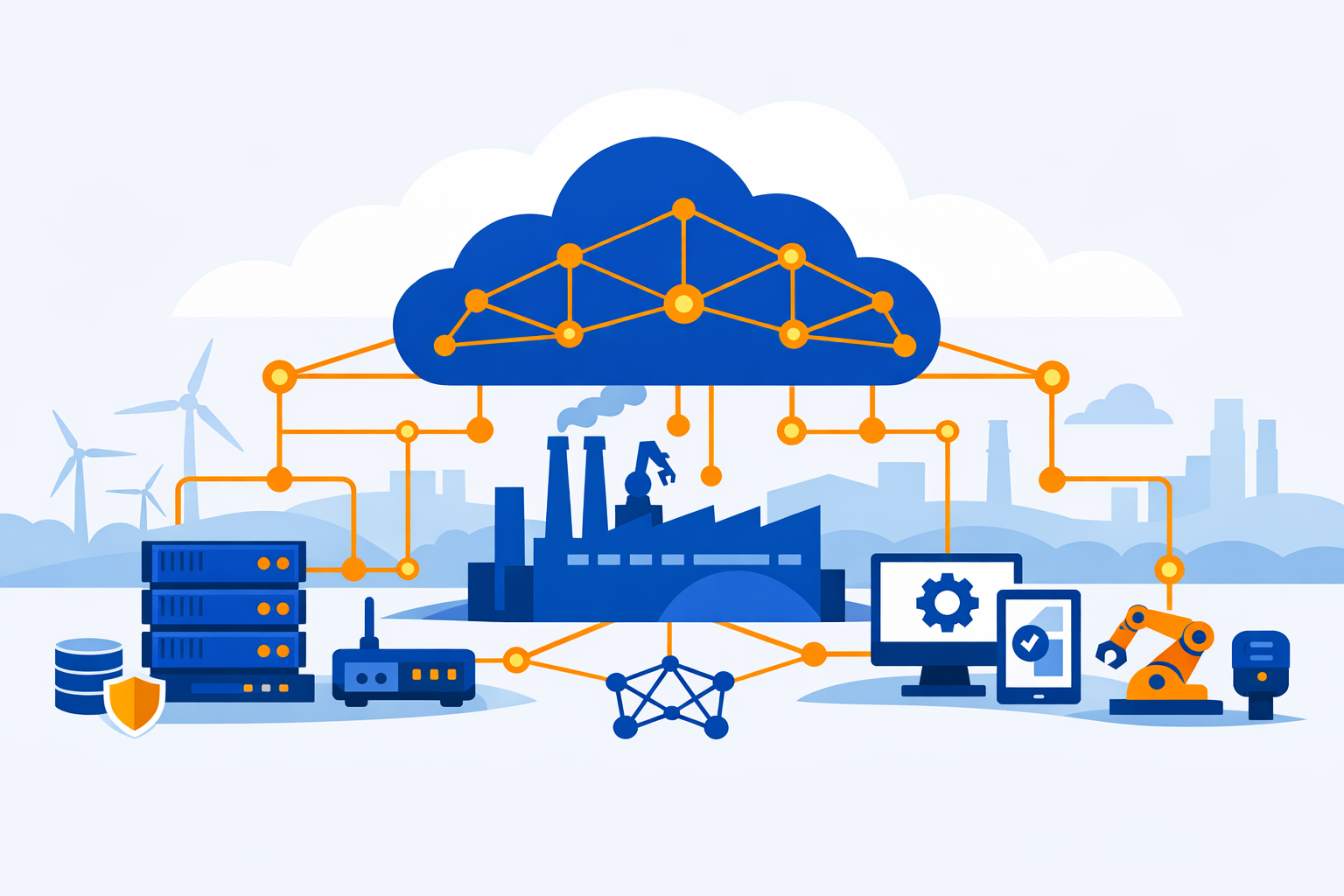
Elastic MES integrates edge-to-cloud continuity, maintaining operations during network interruptions. Open APIs enable integration with ERP, planning, quality, and warehouse systems . The modular, microservices architecture supports land-and-expand deployment, reducing initial risk and allowing measured expansion .
In Europe, sovereign cloud infrastructures are gaining prominence as manufacturers focus on maintaining data sovereignty under GDPR and EU regulatory standards. The February 2026 introduction of the Deutsche Telekom and T-Systems Industrial AI Cloud provided a sovereign, GPU-powered platform rooted in national cloud infrastructure, supporting AI-driven digital twins and traceable data flows . This reflects sovereignty's role in compliance and innovation .
Outlook
With expanding elastic MES adoption, manufacturers are expected to prioritize hybrid and sovereign cloud strategies to meet governance, resilience, and traceability requirements. Interoperability, supported by shared data models and open APIs, will be central to multi-cloud and regulatory-compliant deployments. Ecosystem partnerships are positioned to influence evolving standards for data sovereignty, risk mitigation, and AI-enabled, resilient OT/IT convergence.