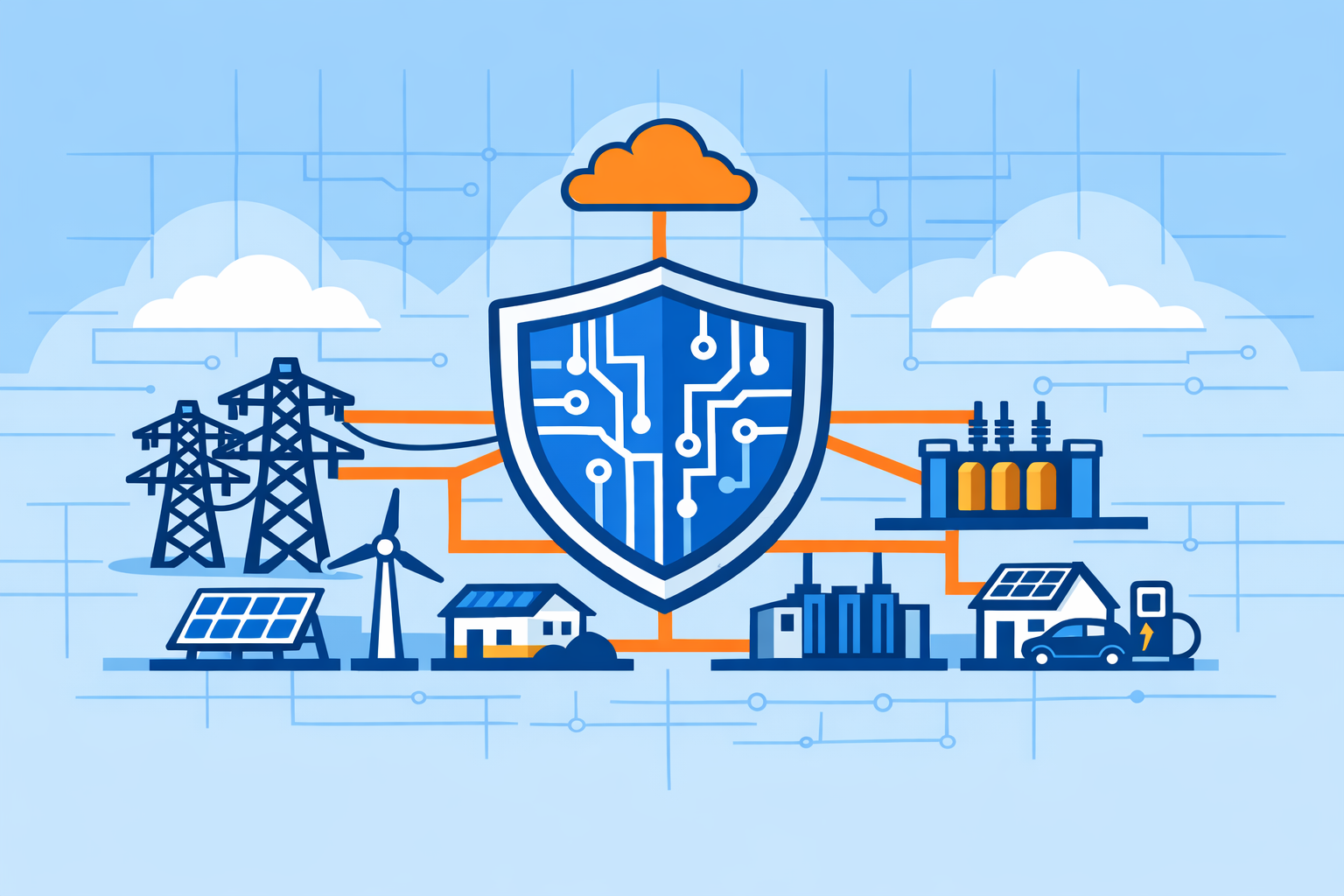
The U.S. Department of Energy (DOE) has awarded a $160 million grant to advance cybersecurity and resilience in the nation's power grid. The funding, provided through the Grid Resilience and Innovation Partnerships (GRIP) program under the Bipartisan Infrastructure Law, targets accelerated adoption of secure, interoperable technologies across electrical systems. Supported projects are designed to strengthen defenses against cyber threats as grid operators integrate legacy infrastructure with cloud-enabled and distributed energy resources (DERs).
Background
The GRIP program funds initiatives that enhance grid flexibility, resilience, and cost efficiency through federal investment. In October 2024, Georgia Power secured a $160 million GRIP grant to implement dynamic line rating and reconductoring technologies, easing customer investment burdens and modernizing transmission infrastructure. Georgia Power secures $160 m from US DOE for grid enhancement, October 22 2024 This grant represents one of the largest federal investments in state-level grid modernization.
The DOE's broader Grid Modernization Initiative (GMI) previously issued grants of $38 million in April 2023 for research and development of tools to integrate energy storage, advance cybersecurity solutions, and incorporate energy justice and climate data into grid planning. DOE Announces $38 Million to Modernize the Electricity Grid, April 25 2023 The Office of Cybersecurity, Energy Security, and Emergency Response (CESER) distributed $30-45 million in 2022 and 2024 to support next-generation cybersecurity tools for clean energy infrastructure and energy delivery systems. DOE Announces $30 Million Funding for Next Generation Cybersecurity Tools, January 17 2024; Energy to fund 16 infrastructure cybersecurity projects ($45 million), February 27 2024
Details
The $160 million grant reflects federal efforts to scale cybersecurity and resilience in parallel with grid modernization. According to Georgia Power, GRIP-funded projects may leverage advanced conductor technology to optimize transmission capacity and allow rapid upgrades to existing infrastructure, supporting the integration of clean energy sources. Georgia Power will utilise GRIP programme funding ... including dynamic line rating technology and the reconductoring of high-voltage power lines, Georgia Power secures $160 m from US DOE for grid enhancement
Integrating legacy grid assets with emerging technologies, including DERs, cloud-based virtual power plants (VPPs), and digital twins, introduces cybersecurity and interoperability challenges. Previous GMI funding addressed cybersecurity architecture, standards development, and integration of medium-voltage subsystems. GMI lab call covers cybersecurity for architectures, standards, and practices, and medium-voltage interfaces, 2023 GMI lab call description CESER's grants focused on secure communication among DERs and VPPs, and on threat detection for energy delivery systems. CESER funding includes securing communications between DERs, DERA and grid, and forensic and threat analysis tools, DOE's $30 million cybersecurity tools announcement
Outlook
Initial performance measures are expected to evaluate improvements in grid reliability, risk reduction, and interoperability, particularly during pilot deployments of GRIP-funded technologies. The DOE and participating utilities plan to release outcome reports as projects advance, assessing impacts on resilience and cyber-risk mitigation. Future grid modernization efforts will depend on adoption of standards and architectures developed through GMI and CESER initiatives by both federal and private-sector stakeholders.