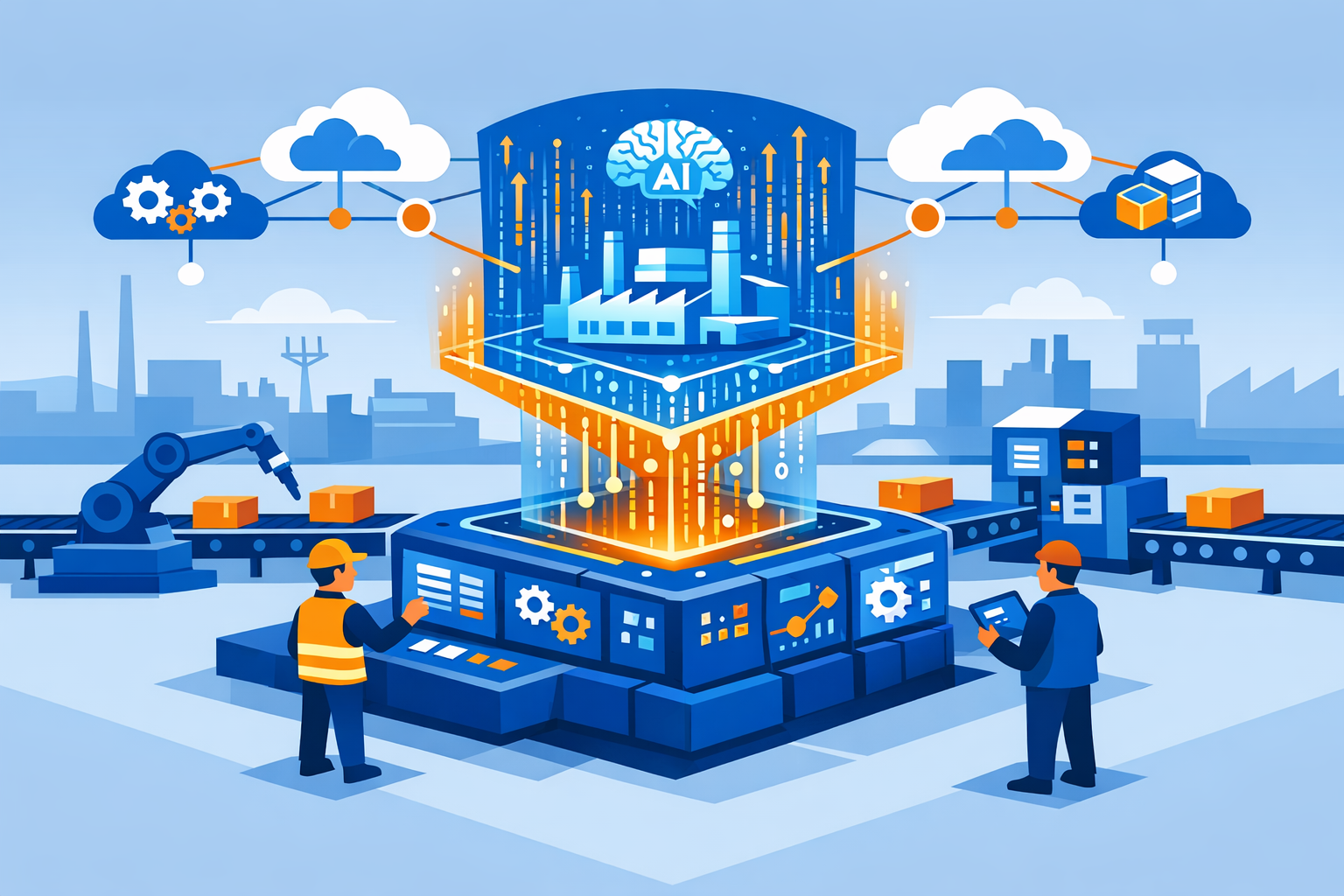
Hannover Messe 2026 will spotlight smart factories, AI-enabled manufacturing execution system (MES) software, and industrial IoT (IIoT) architectures, marking the shift of OT/IT (operational technology/information technology) convergence from pilot phases to scalable production environments. Exhibitors are set to position MES not as an isolated component, but as the central layer of industrial operations platforms, orchestrating planning, execution, quality, and predictive maintenance across edge-to-cloud infrastructures.
Hannover Messe 2026: Context, Themes, and Strategic Signals
Hannover Messe 2026 is scheduled for 20-24 April 2026 in Hanover, Germany, with Brazil announced as the official partner country[1]. The official media program underscores smart factory topics such as digital production, connected automation, and intelligent industrial services. The 2026 editorial schedule highlights "smart factory" as a principal theme in trade fair publications and guided content formats[2].
Trends from recent years indicate likely priorities for 2026:
- AI as a foundational feature in industrial demonstrations, integrated with core operations[3]
- Digital ecosystems connecting MES, ERP, PLM, IIoT platforms, and cloud data services[4]
- Live displays of IT/OT integration, including MES interfacing with brownfield data infrastructure[5]
Three focal questions for industrial operations leaders will center 2026 discussions:
- How quickly can MES-centric architectures incorporate AI and digital twin workloads while sustaining deterministic, real-time control?
- Which interoperability approaches-OPC UA information models, Asset Administration Shells (AAS), or proprietary APIs-will drive scalable IIoT deployments?
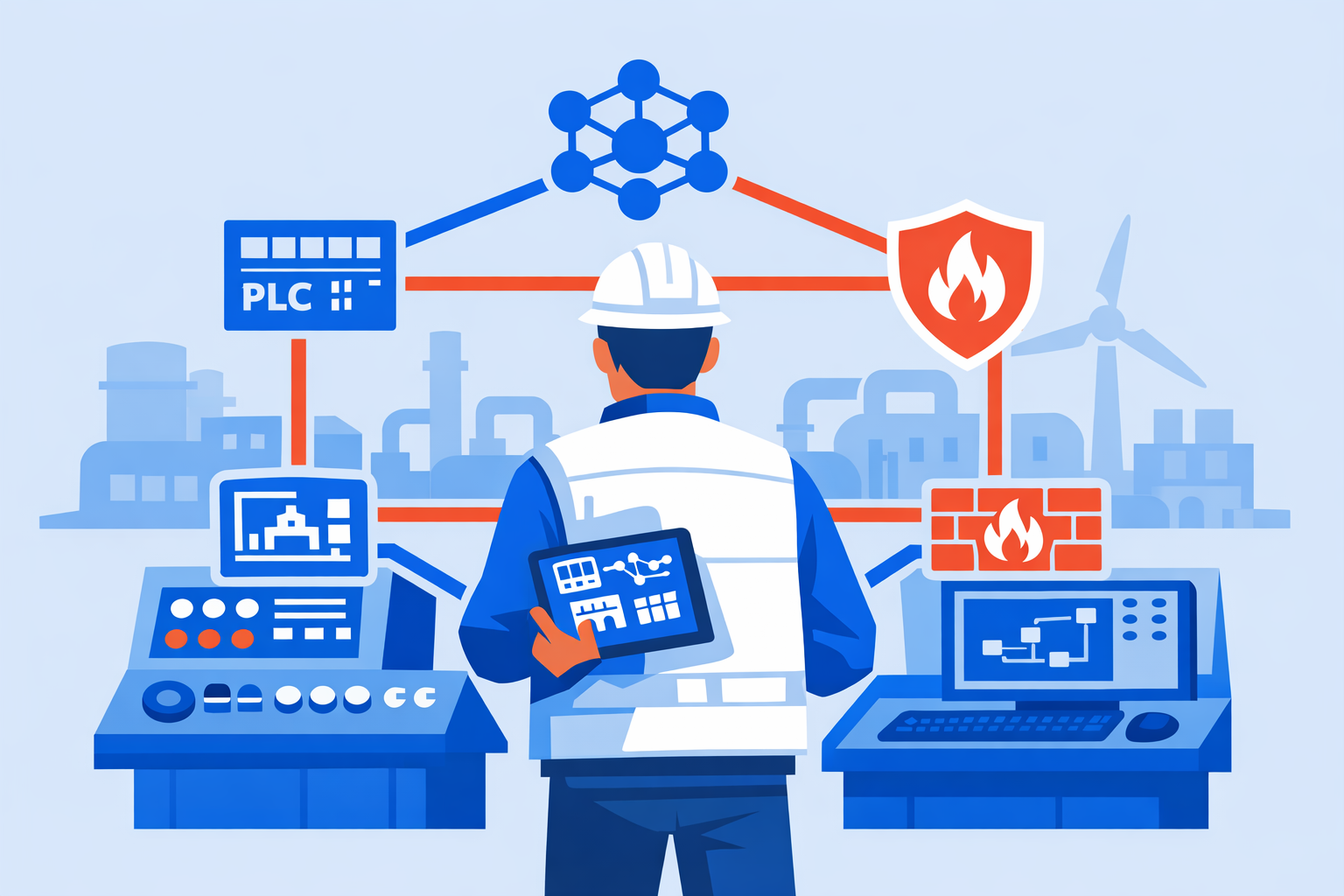
- How will cybersecurity and governance frameworks such as IEC 62443 and NIST standards be realized at the MES and edge-device layer?
From Standalone MES to AI-Enabled Industrial Operations Platforms
The MES software market is evolving as manufacturers seek integrated operations platforms beyond line-level execution. Analysts estimate the global MES software market at approximately USD 16-17 billion in 2024, with projections to USD 30-31 billion by the early 2030s and annual growth rates between 6-12% dependent on segment and region[6]. Growth is fueled by requirements for integrated quality, traceability, and real-time analytics.
Traditional MES vs. Emerging Industrial Operations Platforms
Exhibitors in 2026 will likely present MES as the orchestration layer in AI-enabled operations platforms. The transformation can be summarized as:
| Dimension | Traditional MES | MES-Centric Industrial Operations Platform |
|---|---|---|
| Primary role | Work-order tracking, basic dispatch, electronic batch records | End-to-end orchestration of planning, scheduling, execution, quality, and maintenance |
| Architecture | Monolithic, plant-focused, on-premises | API-first, microservices, hybrid cloud and edge-native |
| Data model | Proprietary schemas, restricted context | Normalized models aligned with OPC UA, AAS, and enterprise data models |
| Integration scope | Direct connections to ERP, SCADA | Standardized integration with ERP, PLM, CAD/CAM, SCADA/DCS, and IIoT platforms |
| Analytics | Basic KPIs and reporting, limited advanced analytics | Embedded AI/ML for optimization, anomaly detection, quality prediction, and prescriptive analytics |
| Extensibility | Heavy customization, vendor-driven | Open SDKs, low-code frameworks, ecosystem marketplaces |
The shift toward platform-centric MES is driven by:
- The need for unified visibility across distributed production networks
- Requirements to deploy AI and digital twins close to real-time shop floor data
- Demand for standardized, governed integrations over custom point-to-point links
At Hannover Messe 2026, MES is expected to be presented as the operations backbone for deploying and scaling manufacturing AI, digital twins, and IIoT applications.
AI, Digital Twins, and Industrial IoT: Workloads Landing on MES Stacks
The AI in manufacturing market is expanding rapidly. Recent market studies value this segment in the low single-digit billions of dollars and project compound annual growth rates (CAGR) over 40%, reaching USD 15-20 billion by the late 2020s[7]. For German manufacturers, AI adoption increased from 6% in 2020 to 13.3% in 2023.AI adoption among German manufacturing companies more than doubled from 6% to 13.3% between 2020 and 2023[8]
Hannover Messe 2026 is expected to highlight architectural responses to these market changes.
Edge-to-Cloud Control Loops
IIoT architectures at the fair will emphasize an edge-cloud continuum:
- Real-time control and analytics at the edge (gateways, industrial PCs, controllers)
- Plant-level MES coordinating orders, quality, and exceptions
- Cloud platforms for historical aggregation, AI model training, and digital twin management[9]
Key partitioning of AI workloads will be highlighted:
- Latency-sensitive tasks (anomaly detection on high-speed lines) handled at the edge tightly coupled to MES events
- Compute-intensive tasks (long-horizon scheduling optimization) processed in the cloud, with outputs synchronized to MES and APS (Advanced Planning and Scheduling) modules
Digital Twins Anchored in MES and AAS Data
Digital twin initiatives will increasingly reference execution data. The Industry 4.0 digital twin concept is now tightly coupled to standardized data envelopes.
The Asset Administration Shell (AAS) serves as a standardized model for describing industrial assets in IIoT and Industry 4.0 environments[10]. Ongoing work on OPC UA integration for the AAS links device-level interoperability with higher-level digital twins and data spaces[11].
At Hannover Messe 2026, solutions are expected to focus on:
- AAS- or OPC UA-based models for machines, lines, and products
- Closed-loop twins validating simulated parameter changes before execution in MES
- Integrating quality twins with MES non-conformance workflows
Manufacturing AI and Predictive Maintenance on MES Data
Previous fairs emphasized predictive quality, intelligent scheduling, and predictive maintenance. These use cases will likely remain central in 2026.
Predictive maintenance drives initial AI adoption:
- Multiple studies report AI-driven predictive maintenance reducing unplanned downtime by approximately 30-50% in manufacturing environments[12]
- One systematic review found predictive maintenance can eliminate around 42% of production line errors, cutting maintenance-related waste[13]
MES functions in predictive maintenance include:
- Supplying contextual data (orders, products, recipes, operators, quality state) for AI models using IIoT sensor streams
- Initiating maintenance, rescheduling orders, and adjusting takt times in response to predictive warnings
- Recording post-maintenance metrics (MTBF, scrap, OEE) for effectiveness tracking and MLOps feedback
Progress in transformer-based health prognosis and causal AI for predictive maintenance signals a trend toward more interpretable, cost-sensitive models suited to industrial environments[14]. Hannover Messe 2026 is likely to display these methods within MES-driven maintenance processes, under the banners of "manufacturing AI" or "intelligent asset performance management."
Data Models and Interoperability: Foundation for OT/IT Convergence
Successful OT/IT convergence relies on common semantics, not just connectivity. Standardization in device interoperability, asset description, and data governance is critical for scaling MES-powered AI.
OPC UA and Information Models
OPC Unified Architecture (OPC UA) is a core standard for secure, platform-independent industrial data exchange. OPC UA specifies a platform-neutral, service-oriented architecture with an extensible information model layer for device, machine, and process data standardization[15].
Interoperability at Hannover Messe 2026 will likely feature:
- OPC UA-enabled controllers, sensors, and edge gateways feeding normalized data to MES and IIoT systems
- Vendor-neutral models for specific asset classes (machine tools, robots, process skids)
- Cross-vendor MES applications subscribing to shared OPC UA servers for KPIs, alarms, and events
Asset Administration Shell and Data Spaces
The AAS is emerging as the semantic foundation for Industry 4.0 components, structuring:
- Static asset details (nameplate, capabilities, configuration)
- Dynamic operational data (process values, maintenance history)
- Documentation, CAD models, simulation artifacts[16]
When combined with OPC UA transport and emerging data space architectures, AAS models enable:
- Cross-enterprise digital twins among OEMs, integrators, and plant operators
- Traceable data for AI trained on distributed datasets
- Streamlined MES integration with supplier and customer systems
Hannover Messe 2026 will provide a measure of how extensively MES and IIoT vendors support:
- AAS and OPC UA models in data architectures
- Standard-based APIs for MES master data and event sharing
- Participation in initiatives such as Manufacturing-X aligned to European data sovereignty[17]
Cybersecurity, Governance, and Compliance at the OT/IT Boundary
As MES bridges shop floor automation and enterprise analytics, cybersecurity and governance become key architectural elements.
The IEC 62443 standards address processes, techniques, and requirements for securing industrial automation and OT at levels spanning system, component, and organization[18]. The NIST Cybersecurity Framework Manufacturing Profile adds implementation detail for manufacturing environments[19].
Expected cybersecurity focus areas at Hannover Messe 2026 include:
- Defense-in-depth: IT/OT zone segmentation, secure MES/SCADA remote access, DMZ hardening
- Identity access management: Role-based MES access, device identities for IIoT assets, IAM integration
- Secure development: IEC 62443-based MES software lifecycles and certified, secure-by-design hardware
- Data governance: Controls on MES and sensor data export, data pseudonymization/anonymization, recorded AI training datasets for audit in regulated industries
For many, operational compliance (reference architectures, configuration baselines, documented procedures) will outweigh broad alignment claims.
What Manufacturing Leaders Should Look For at Hannover Messe 2026
Senior operations and IT/OT leaders should evaluate MES-powered, AI-driven solutions through structured criteria.
Key evaluation areas:
- Architecture and deployment
- Modular, microservices-based MES components
- Hybrid deployment support with functional parity across on-premises, edge, and cloud
- Data model and interoperability
- Native support for OPC UA and AAS-based asset models
- Standard connectors for ERP, PLM, CAD/CAM, SCADA/DCS, IIoT platforms
- AI and digital twin integration
- Clear separation of training (cloud) and inference (edge/MES) workflows
- Use of MES data as foundation for twins, predictive maintenance, and scheduling
- Security and governance
- Documented IEC 62443 zone/conduit mappings
- Integration with IAM and centralized logging for MES and OT events
- Operational metrics and ROI
- Quantified effects on OEE, scrap, energy, maintenance KPIs
- Reference cases with before/after data and insights, beyond proof-of-concept demos
Next Steps for Manufacturers Preparing for MES-Powered AI
Manufacturers can undertake key steps before Hannover Messe to prepare for vendor assessments.
1. Clarify Target Use Cases and KPIs
Enter the event with prioritized use cases, such as:
- Predictive maintenance for critical assets
- AI-assisted quality inspection and process capability analysis
- Scheduling optimization for constrained resources
Each should have specific KPIs (e.g., unplanned downtime, scrap rate, changeover time) to drive solution evaluation.
2. Assess Current OT/IT and Data Model Maturity
Preparations should include:
- Inventory of MES, SCADA, PLC, and IIoT systems and their connectivity
- Evaluation of current use of OPC UA and prevalence of proprietary protocols
- Mapping of existing master data models to emerging AAS-based structures
This baseline supports accurate assessment of integration complexity and migration risks.
3. Define Security and Governance Guardrails
Organizations increasingly specify non-negotiable security and governance requirements, such as:
- Minimum IEC 62443 alignment for MES systems
- Requirements for audit trails, data lineage, and AI traceability
- Data residency and participation in data-space frameworks, particularly in EU contexts
4. Prepare an Evaluation Framework for Hannover Messe
Structured scorecards help compare vendors effectively by capturing:
- Architectural alignment to reference models
- Standards support (OPC UA, AAS, sector-specific)
- AI life cycle coverage (data engineering, MLOps, model governance)
- Ecosystem maturity (system integrators, reference clients, support)
Such tools translate Hannover Messe insights into actionable, comparable roadmap inputs.
Frequently Asked Questions
How is MES software evolving in the context of OT/IT convergence?
MES is shifting from plant-centric execution toward integrated industrial operations platforms linked with ERP, PLM, CAD/CAM, SCADA, and IIoT via standardized interfaces. Architectures now emphasize microservices, APIs, and hybrid deployments to support AI and digital twins while maintaining deterministic control.
What role will digital twins play in MES-centric architectures at Hannover Messe 2026?
Digital twins are increasingly built on MES and IIoT data as primary operational sources. Standards like the Asset Administration Shell and OPC UA structure these models. At Hannover Messe 2026, digital twin solutions will demonstrate closed-loop integration, validating process changes virtually before MES-driven execution, reducing downtime and scrap.
Why are standards like OPC UA and the Asset Administration Shell important for manufacturing AI?
High-quality, contextual data is essential for manufacturing AI. OPC UA standardizes secure data transport and structure, while the AAS introduces a semantic layer. These frameworks reduce integration complexity, promote interoperability, and enable reusable AI models across manufacturing networks.
How do IEC 62443 and NIST frameworks influence MES and IIoT deployments?
IEC 62443 and NIST standards provide architectures and control guidelines for securing industrial automation and OT. MES and IIoT deployments built to these standards typically feature network segmentation, hardened components, identity management, and comprehensive logging. Standards adherence increasingly functions as a deployment baseline.
What indicators suggest that a predictive maintenance solution is ready for large-scale deployment?
Readiness indicators include demonstrated reductions in downtime and maintenance costs in pilot environments; MES and CMMS integration for automated work orders; robust management of data quality and sensor drift; and established MLOps practices. Research showing 30-50% reduction in unplanned downtime with mature predictive maintenance highlights substantial potential as solutions are scaled and governed effectively.[12]