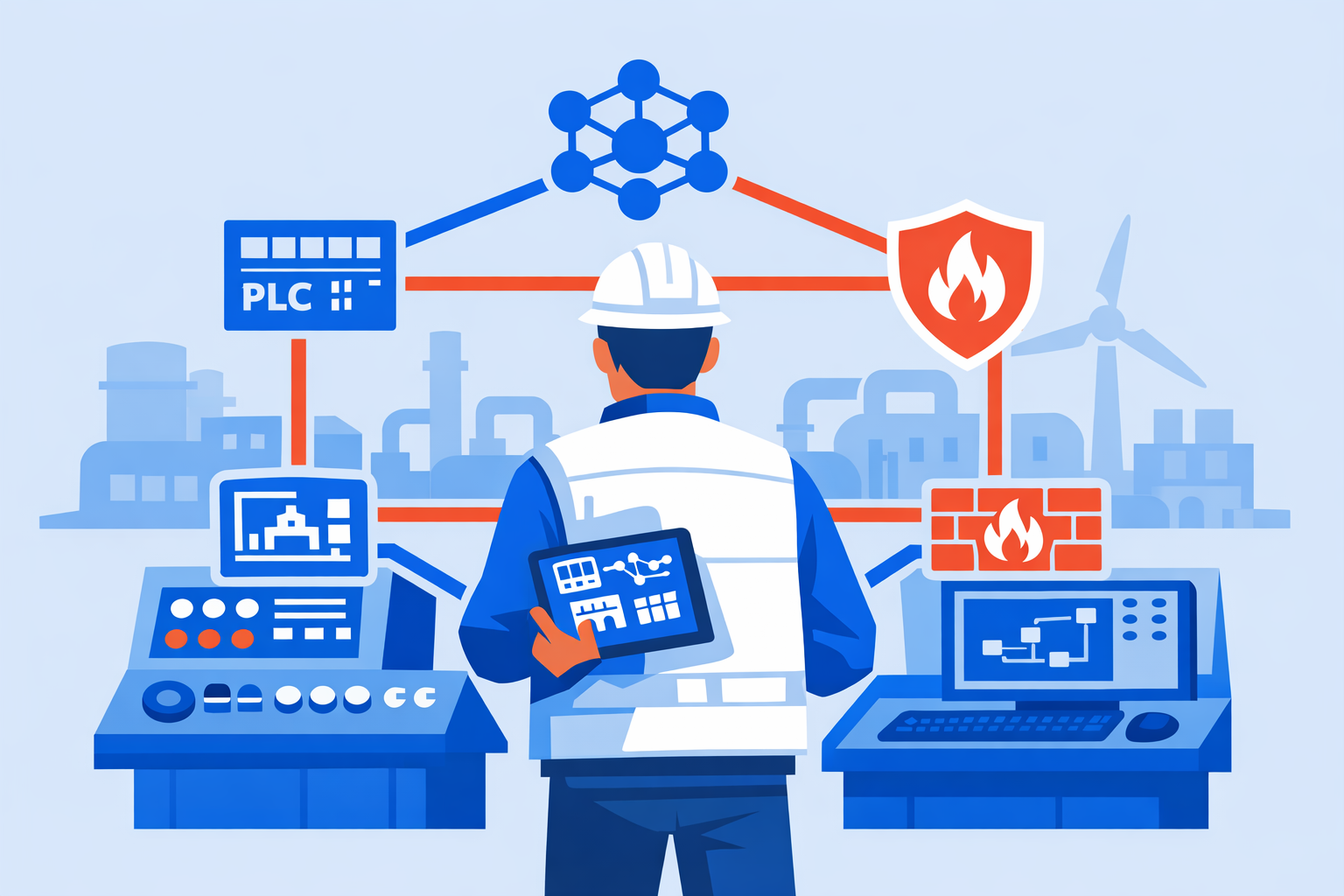
Rockwell Automation has positioned its cloud-native Elastic Manufacturing Execution System (MES) portfolio as a centerpiece of its European industrial digitalization strategy, intensifying pressure on manufacturers to converge operational technology (OT) and information technology (IT) infrastructures while navigating a tightening regulatory landscape across the EU.
Background
Rockwell Automation (NYSE: ROK) announced a series of strategic innovations to its MES portfolio on December 9, 2025, focused on flexibility, scalability, and resiliency. The Milwaukee-based company described the resulting Elastic MES platform as a cloud-native, interoperable architecture designed to unify operations across OT and IT.[1]
The announcement builds on Rockwell's 2021 acquisition of Plex Systems, a cloud-native manufacturing platform. At the time, Plex offered the only single-instance, multi-tenant Software-as-a-Service (SaaS) manufacturing platform operating at scale, spanning MES, quality, and supply chain management. Rockwell Automation was subsequently named a Leader in the IDC MarketScape: Worldwide Manufacturing Execution Systems 2024-2025 Vendor Assessment.
The European context for this expansion is defined by mounting regulatory obligations. Germany's NIS2 implementation took effect on December 6, 2025, following approval by the Bundesrat on November 21, 2025, with no transition period for the approximately 29,850 German organizations brought into scope. Manufacturing-including pharmaceuticals, chemicals, and medical devices-is explicitly listed among sectors subject to the directive. The EU's regulatory framework aims to be comprehensive and enforceable, but organizations face overlapping frameworks, the need to align IT and OT practices, and demanding requirements under threat of financial and reputational penalties.
Technical Architecture and Operational Detail
The Elastic MES platform features purpose-built applications for discrete, hybrid, and regulated industries; a multi-tenant SaaS environment with embedded AI; unified OT/IT integration; and flexible deployment options ranging from cloud-only to hybrid configurations.[2]
An elastic MES combines a modular architecture with a fully integrated manufacturing ecosystem. Each module is deployable individually, allowing manufacturers to start with essential capabilities and expand as operations grow without a full system overhaul. The platform incorporates failover protection, encryption, and audit-ready governance features to support business continuity and regulatory alignment, pairing local edge execution with cloud flexibility to maintain uptime and data integrity during network interruptions.
According to Rockwell's 2025 State of Smart Manufacturing Report, 21% of manufacturing leaders cite integration challenges as a top internal obstacle. Lorenzo Veronesi, associate research director at IDC, stated that "legacy MES systems, while foundational, have become barriers to agility" and that the future lies in platforms enabling manufacturers to "reconfigure processes on demand, integrate seamlessly across the digital thread, and accelerate innovation."
Anthony Murphy, vice president of product management at Rockwell Automation, stated that "DIY and disparate systems increase cost, risk and complexity," adding that the elastic MES "unifies critical applications across OT and IT on a cloud-native, resilient architecture that grows with our customers."
The IDC MarketScape noted that "due to its broad portfolio and large size, with a truly global delivery model, Rockwell Automation can act as a one-stop shop for smart manufacturing by offering an interoperable edge-to-cloud portfolio that is designed to meet customers where their needs are, with logical on-ramps to broader Industry 4.0 capabilities."
Pharma-sector deployments illustrate the regulated-industry use case: a pharmaceutical developer implemented FactoryTalk PharmaSuite to establish a digital manufacturing core and improve efficiency.
European Regulatory Headwinds
Cloud-based MES deployments in Europe face compounding compliance demands. The NIS2 Directive, which began replacing NIS1 from October 2024, applies to a broad range of entities across sectors including digital infrastructure, manufacturing, health, and transport. NIS2 introduces administrative fines for essential entities of up to €10 million or 2% of global annual turnover, whichever is higher.
Global cyberattacks rose approximately 21% in Q2 2025 versus the same period the prior year, with Europe recording the highest region-level increase. NIS2 formally extends cybersecurity responsibility to the executive suite, making a breach not merely a technical failure but a governance issue with operational consequences.
One of the most significant shifts under NIS2 is the extension of an "all-hazards" security posture beyond an organization's own perimeter. Industrial leaders are now responsible for assessing the cyber hygiene of every third-party vendor, system integrator, and OEM that interacts with their operations. For multi-site manufacturers adopting cloud MES platforms, this supply chain scrutiny extends to the MES vendor itself.
France, the Netherlands, and Spain-three major EU economies-remain among those still working through NIS2 transposition, creating a patchwork compliance landscape where multinational manufacturers face varying requirements and timelines across member states.
Outlook
European cybersecurity regulation has crossed a critical threshold. As 2026 progresses, NIS2 is no longer a directive organizations prepare for in theory; oversight bodies across the EU are moving into enforcement mode, and cybersecurity expectations are being tested against real operational capability. For European manufacturers evaluating cloud-native MES platforms, this regulatory trajectory will make audit-ready governance features-such as those embedded in Rockwell's elastic architecture-an increasingly decisive procurement criterion. An elastic MES supporting both cloud and edge environments enables global scalability while helping manufacturers manage multiple sites with consistent performance, visibility, and compliance.