Siemens used Hannover Messe 2026 to announce a broad expansion of its Industrial Edge ecosystem, releasing the Industrial AI Suite for general availability and introducing enhanced cybersecurity capabilities targeting operational technology (OT) environments in critical infrastructure. The announcements, made on April 22 in Hannover, Germany, mark a significant step in Siemens' strategy to push data processing and AI workloads closer to the shop floor, reducing dependence on centralized cloud infrastructure while tightening governance over industrial data.
Background
The OT/IT convergence imperative has intensified as manufacturers face growing pressure to derive real-time insights from shop-floor data without routing sensitive operational information through external cloud networks. Legacy architectures that centralize telemetry in the cloud introduce latency that time-sensitive production environments cannot tolerate and expose OT networks to broader attack surfaces. The edge compute shift matters particularly for process industries, where round-tripping data to the cloud adds delays incompatible with production timelines. Running AI compute at the edge - close to physical processes - removes that constraint. At Hannover Messe 2026, which ran from April 20 to 24, the broader industry theme centered on Physical AI: intelligence embedded directly in machinery, automation systems, and plant operations.
Details
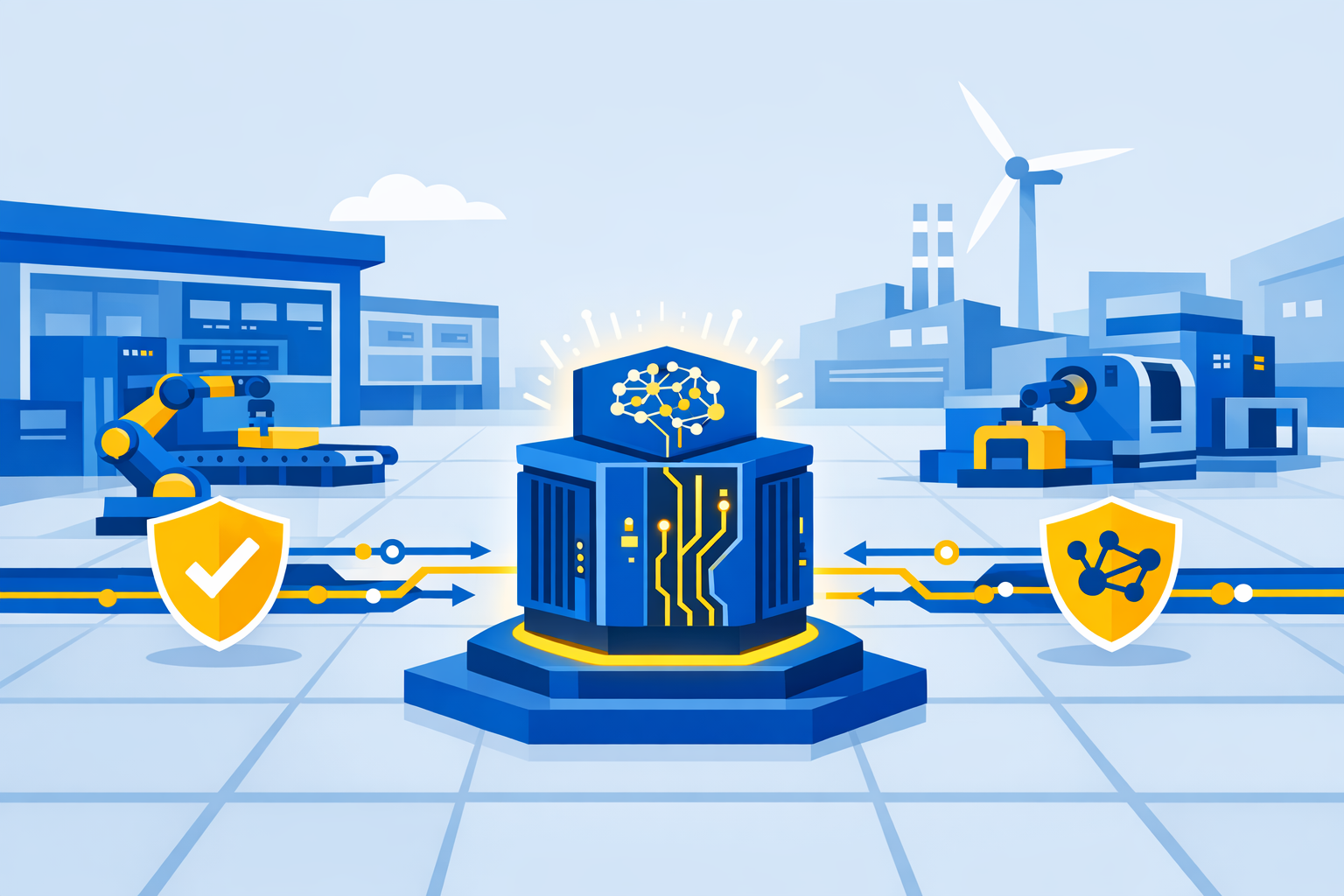
Siemens announced significant expansions to its Industrial Edge ecosystem, accelerating data and AI integration and releasing enhanced cybersecurity functionalities. The Industrial AI Suite, based on Industrial Edge, is now generally available as of Hannover Messe 2026, according to Siemens. The suite simplifies the full AI lifecycle and enables embedding industrial AI through a complete infrastructure for scaling models across locations, supporting applications such as predictive maintenance and visual inspection to reduce downtime and improve production quality. In its latest version, the suite enables more effective AI model retraining by allowing customers to combine image data with production data from manufacturing execution systems (MES) or controllers - a capability that directly addresses the challenge of training accurate models from heterogeneous shop-floor data sources.
On the data governance side, the Industrial Information Hub has been fundamentally expanded. The data management solution now enables bidirectional data flow, allowing data models to be synchronized between edge devices and central IT systems in both directions. This architecture supports data sovereignty requirements by keeping sensitive process data on-premises while still enabling enterprise-level visibility.
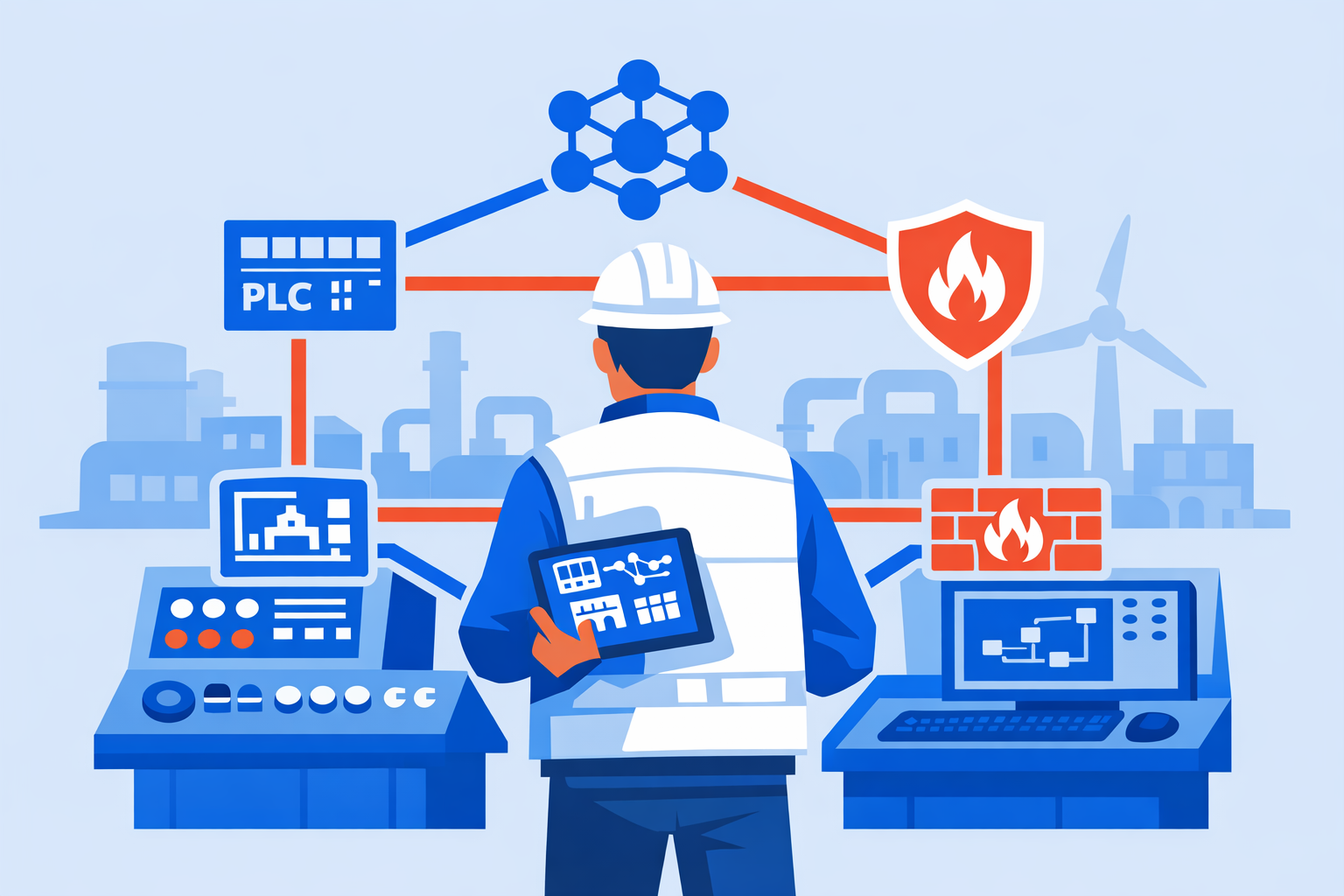
For SCADA integration, monitoring and data acquisition with SCADA systems is now possible in a decentralized manner via Industrial Edge. WinCC Unified is now generally available, and WinCC Open Architecture is available as an Edge App and for the virtual PLC (SIMATIC S7-1500v). Decentralized SCADA deployment reduces single points of failure and allows plant operators to maintain local visibility even when connectivity to centralized systems is interrupted.
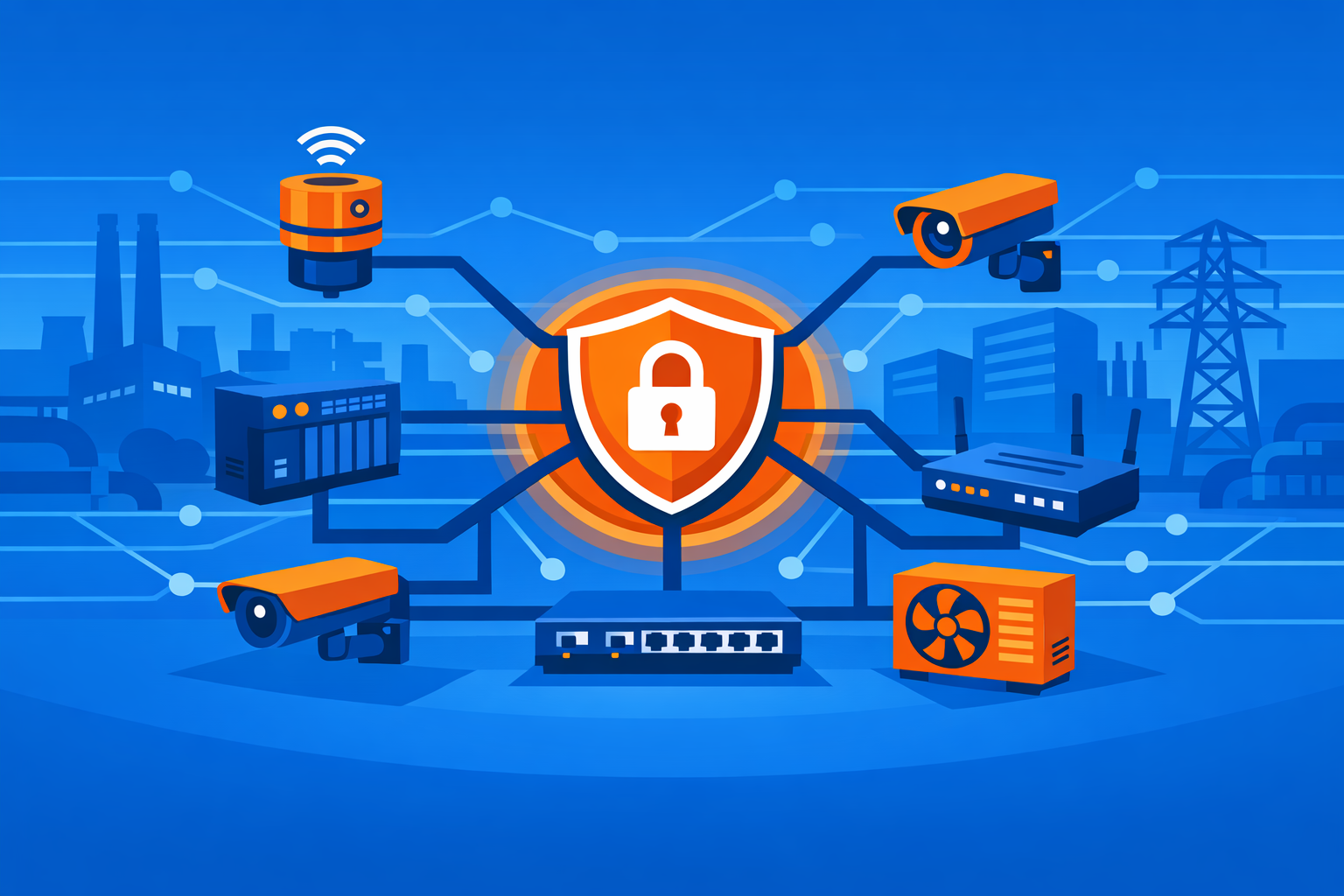
Regarding cybersecurity, IEC 62443-4-2-certified security functions for critical infrastructures, including air-gapped operation, are targeted for release in the second half of 2026, according to Siemens. These security and data management capabilities have been independently confirmed: testing institute UL Solutions awarded Siemens Industrial Edge and the virtual PLC the "Smart Systems Verified - Platinum" certification, evaluating six key categories including connectivity, interoperability, resilience, and cybersecurity.
To address interoperability with non-Siemens infrastructure, the platform now supports additional hypervisors such as OpenShift and Hyper-V, enabling Industrial Edge to run on existing IT infrastructures. Siemens also expanded its partner ecosystem: together with 36Zero Vision, MVTec, and Basler, Siemens is developing machine vision and quality inspection solutions that support AI-driven defect detection, no-code image processing, and modular image processing functions, allowing manufacturers to integrate machine vision use cases at scale. OnLogic is also joining the Industrial Edge ecosystem to deliver capabilities for harsh industrial environments, bringing secure, centrally managed digitalization to oil and gas, demanding manufacturing settings, and remote edge locations.
On a parallel track, in partnership with NVIDIA and in collaboration with Palo Alto Networks, Siemens delivers secure NVIDIA computing infrastructure at the edge for AI acceleration, alongside NVIDIA BlueField data processing units (DPUs) for intelligent real-time data processing and security from Palo Alto Networks Prisma AIRS.
Outlook
The expansion addresses a critical industry need: implementing standardized, pre-integrated AI infrastructure poses significant challenges for many industrial companies, with integration, installation, and system engineering alone requiring up to 80 hours. Enterprises evaluating edge deployments will need to weigh the platform's growing openness - hypervisor flexibility and a multi-partner ecosystem - against the integration depth that comes from remaining within the Siemens stack. The IEC 62443-4-2 air-gap certification, targeted for H2 2026, will be a critical milestone for manufacturers in regulated sectors assessing whether the platform meets their OT security baselines.