A software-defined radio attack that halted four high-speed trains in Taiwan for 48 minutes has drawn global attention to systemic vulnerabilities in operational technology (OT) communications systems used by rail operators worldwide.
Background
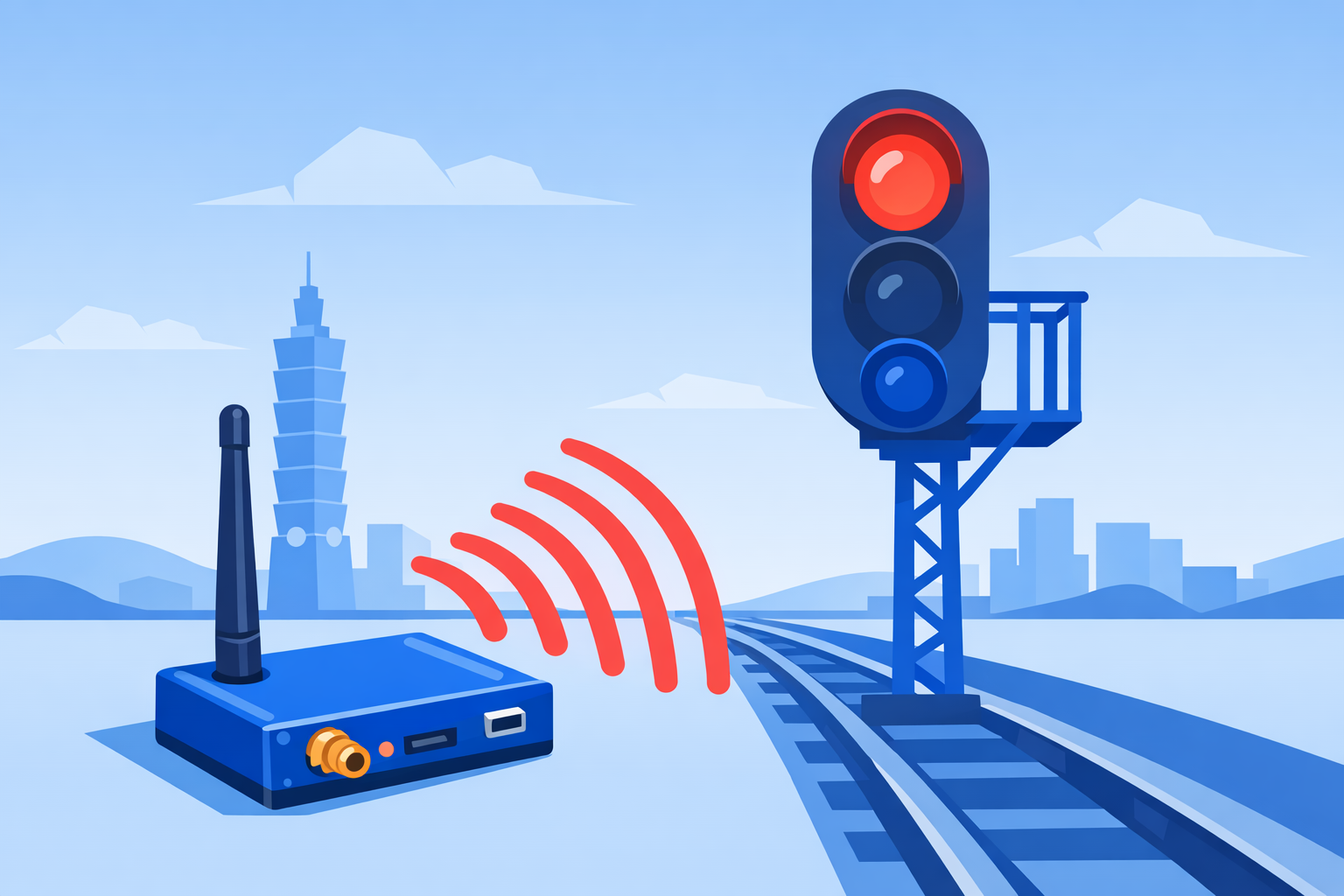
On April 5, 2026, at 23:23 local time, Taiwan High Speed Rail Corp (THSRC) received a falsified General Alarm signal transmitted into its TETRA-based operational communications system near Taichung Station, triggering emergency braking across multiple high-speed trains. THSRC is a state-supported network carrying 81.8 million passengers annually along a 350 km western coastal line, with trains operating at speeds up to 300 km/h.
Authorities subsequently arrested a 23-year-old university student identified by his surname Lin, who allegedly used commercially available software-defined radio (SDR) equipment to intercept, decode, and retransmit TETRA radio parameters, effectively cloning the identity of authorized station hardware. A 21-year-old accomplice allegedly supplied critical network parameters that enabled the attack. Police seized 11 handheld radios, an SDR receiver, and a laptop from the suspect's residence.
Taiwan's Ministry of Transportation and Communications pledged to submit a formal report on ways to harden communication security across railway systems following the incident.
Details
Investigators identified a critical condition at the root of the breach: the THSRC TETRA radio system had been in service for 19 years and its cryptographic parameters had apparently not been rotated during that period, allowing the suspect to bypass seven verification layers. According to Wouter Bokslag, founder of security consultancy Midnight Blue, whose firm has studied TETRA vulnerabilities since 2023, the protocol "can definitely be secure" but "is easy to leave in an insecure configuration."
The attack method-known as signal replay or SDR spoofing-does not constitute traditional network intrusion. According to IoT Insider, it "targets the trust placed in radio signals themselves, particularly in legacy OT systems where authentication, encryption deployment, or parameter management may be inconsistent." In 2023 and again in 2025, researchers at Midnight Blue disclosed significant vulnerabilities in TETRA protocol implementations, leaving a low-security access path available to attackers. Following those disclosures, the European Telecommunications Standards Institute (ETSI) published TETRA's security algorithms for public scrutiny.
Denis Calderone, CTO at Suzu Labs, described the Taiwan incident as evidence of structural failure across multiple jurisdictions, noting that "in recent history we can point to three modern rail attacks in three different countries-Taiwan, Poland, and the United States-all dealing with the same fundamental problem." For context, in August 2023, hackers in Poland used a simple three-tone VHF radio signal to halt approximately 20 trains across three regions, with equipment estimated to cost under $30. In the United States, a vulnerability in End-of-Train radio devices capable of triggering emergency brakes was first reported in 2012, remained unaddressed until a CISA formal advisory in 2024, and industry fixes are not expected until 2027.
Larry Pesce, VP of Services at Finite State, attributed the Taiwan breach to "a legacy system designed under obsolete threat assumptions, deployed with security mechanisms that were never updated, operating in a world where the tools to exploit it are cheap, widely available, and well-documented." Cybersecurity consultant Lukasz Olejnik, who studied the Poland incidents, drew a direct comparison: "For Poland, the hackers duplicated legacy analog tones that indicated an emergency. For Taiwan, it apparently required understanding the environment and extracting or cloning the necessary parameters." Olejnik stated the broader lesson: "Communication protocols add resilience only if deployed well and everything-authentication, key rotation, terminal control, anomaly detection-are actually enforced."
Taiwan's Taoyuan District Prosecutors' Office assigned a special investigative team involving the Railway Police Bureau and the Criminal Investigation Bureau's Electronic Investigation Brigade. Lin faces charges under Article 184 of Taiwan's Criminal Code and the Railway Act, with a combined potential sentence of up to 10 years in prison. He was released on NT$100,000 bail (approximately $3,280 USD) pending trial.
The incident also revealed lateral exposure beyond the high-speed rail network. Reports indicate the suspect had obtained parameters sufficient to access communications for the New Taipei City Fire Department and the Taoyuan International Airport MRT Line. Democratic Progressive Party Legislator Ho Shin-chun asked publicly: "If a college student could hack into a system as sophisticated as that of the high-speed rail system, what would happen if the same thing happened with the Taiwan Railway Corp's system?"
The wider geopolitical dimension adds urgency. Taiwan's critical infrastructure faces an estimated 2.63 million intrusion attempts per day from China-linked actors. At the CYBERSEC conference in Taipei, Dragos Public Sector CTO Chuck Weissenborn identified a China-linked cyberespionage group called Azurite that targets Taiwan and other countries, appearing focused on "stealing the settings and behavior rules that underpin critical infrastructure"-activity Weissenborn characterized as "preparation for an attack."
Outlook
Taiwan's Ministry of Transportation and Communications is expected to deliver formal findings on railway communication hardening, while authorities have committed to a formal security review of all affected radio systems, including those serving fire departments and metropolitan rail lines. Security experts are urging rail operators globally to implement mandatory cryptographic key rotation schedules, anomaly detection on signal networks, and rigorous OT asset inventories. Railway infrastructure typically remains in service for more than 30 years, making systematic upgrades time-consuming and operationally complex. According to Marty Edwards, Tenable Deputy CTO for OT/IoT, "the traditional approach of isolating critical infrastructure from the outside world is no longer viable"-a reality the Taiwan incident has now demonstrated in high-speed operational terms.