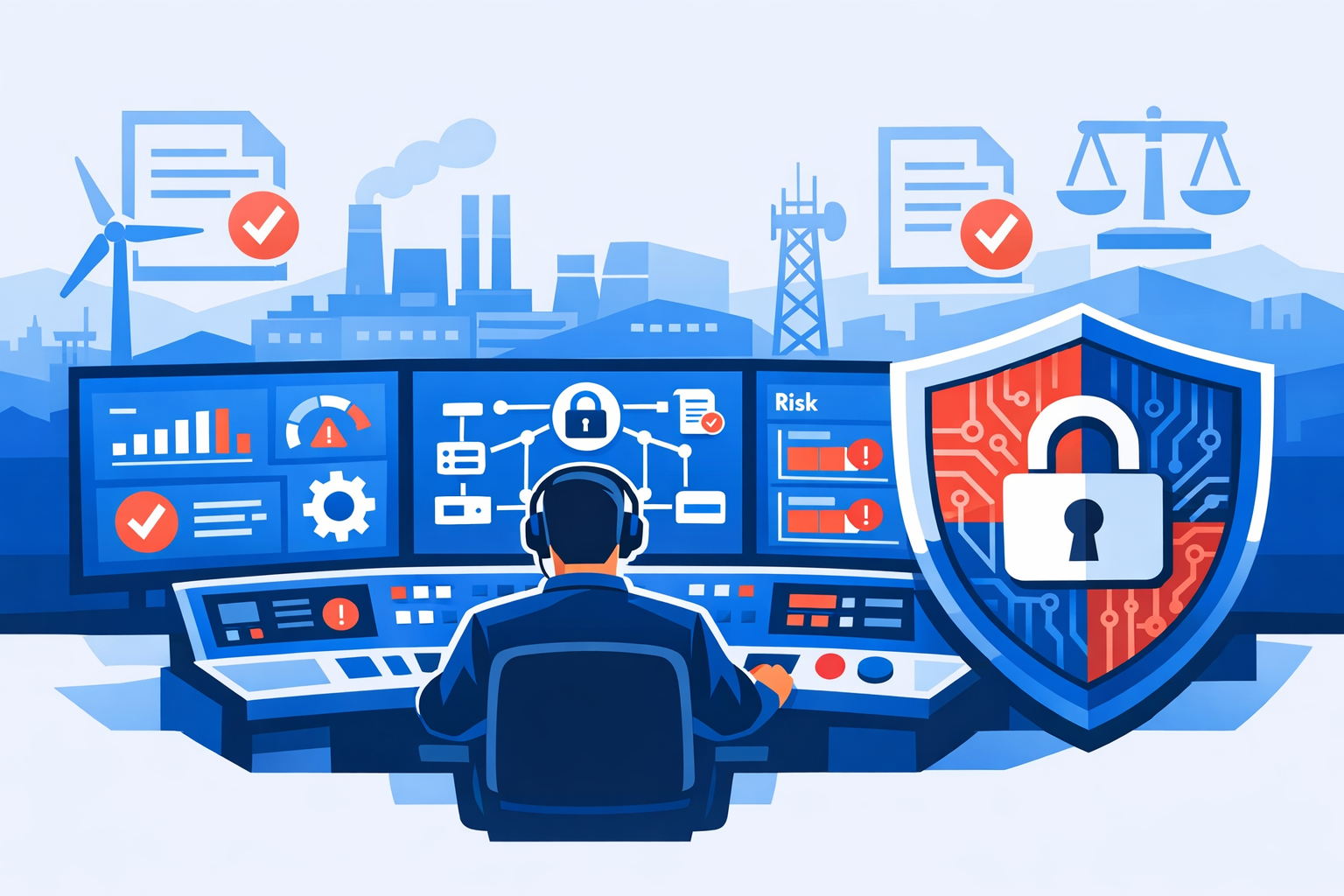
Consider this: only 16% of corporate boards currently receive reports on OT security, yet manufacturing became the most attacked industry in 2024-2025, with ransomware and supply chain exploitation surging. The gap between boardroom awareness and shop-floor exposure has never been more consequential - and the World Economic Forum's latest AI-enabled cybersecurity guidance draws a direct line between industrial governance failures and systemic business risk.
The WEF's Global Cybersecurity Outlook 2026[1], published in January 2026 in collaboration with Accenture, and its companion report Empowering Defenders: AI for Cybersecurity[2] - produced through the Forum's Cyber Frontiers: AI & Cyber initiative - together constitute the most detailed framework global business leaders have produced for deploying AI-driven security responsibly across environments where IT and OT intersect.
For manufacturers, utilities, and critical infrastructure operators accelerating digital transformation, the framework's implications extend well beyond the security team's remit.
Why the Framework Matters Now for OT Environments
According to the WEF Global Cybersecurity Outlook 2026, 94% of respondents identify AI as the most significant driver of cybersecurity change in 2026, and 87% flagged AI-related vulnerabilities as the fastest-growing cyber risk throughout 2025. These figures reflect a structural shift, not a cyclical one.
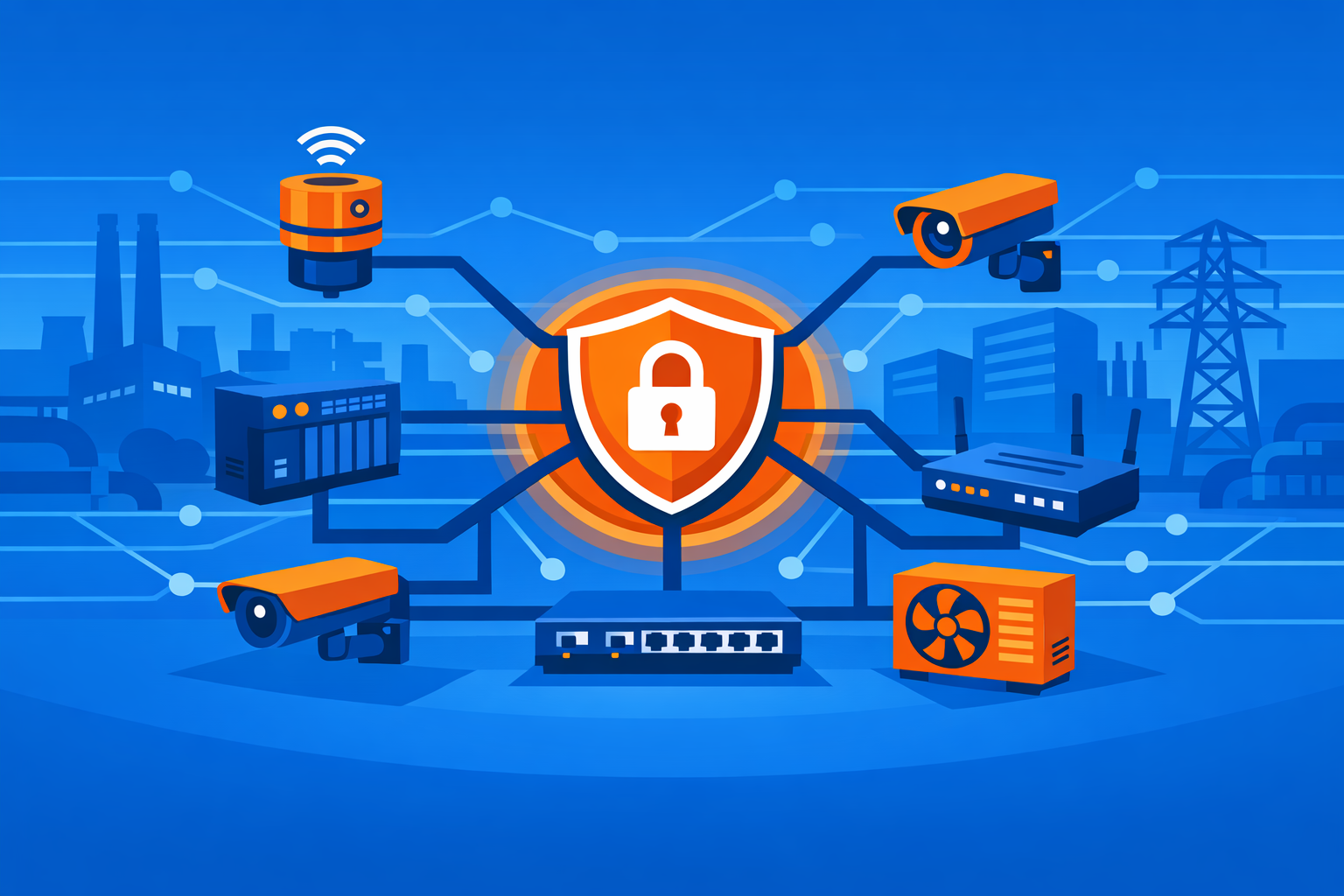
For OT environments specifically, convergence with IT systems has fundamentally altered the threat surface. As the WEF report identifies[3], the boundary between IT and OT has all but disappeared in sectors such as manufacturing, energy, transportation, and critical infrastructure, with strict air-gapped segregation increasingly untenable given modern connectivity requirements.
The consequence is acute: a breach in OT can cascade into physical damage, safety incidents, and prolonged downtime[4]. Unlike IT incidents, OT disruptions carry direct operational, safety, and regulatory consequences that can take days or weeks to remediate.
Despite this, survey data reveals that governance practices around OT remain inconsistent and often siloed within operational teams[3]. The WEF framework is a direct response to this fragmentation.
The article Systemic Risk Rises as OT Security Gaps Persist in 2026 on this publication explored Dragos's finding that fewer than 30% of OT networks have visibility across IT/OT boundaries. The WEF framework now provides the governance architecture to address what that visibility gap enables adversaries to exploit.
Three Pillars of the WEF AI Cybersecurity Framework - and Their OT Implications
1. Structured Deployment and Lifecycle Risk Management
The framework rejects the model of treating security as a project with a defined end date. Instead, it calls on organizations to treat AI as a foundational security capability, investing not only in technology but also in the skills, processes, and governance required to defend at machine speed[5].
In practice, this means embedding risk assessments into the operational lifecycle of every AI-enabled tool - from anomaly detection platforms on the plant floor to predictive maintenance systems connected to enterprise networks. Predictive maintenance tools powered by AI, for example, should be rigorously tested for security vulnerabilities before deployment[6].
The governance data reflects a maturing posture, but significant gaps remain. The percentage of organizations with processes in place to assess AI tool security nearly doubled year over year, from 37% in 2025 to 64% in 2026. However, roughly one-third still lack any process to validate AI security before deployment[7], leaving systemic exposures even as AI adoption in cyber defense accelerates.
2. Cross-Industry Interoperability and Supply Chain Governance
The framework's emphasis on standardized risk communication holds particular relevance for manufacturing supply chains, where OT environments span multiple tiers of suppliers, integrators, and service providers. 65% of large companies now identify third-party and supply chain vulnerabilities as their greatest challenge to resilience - up from 54% in 2025.
Yet only 27% of organizations simulate cyber incidents with supply chain partners, and just 33% comprehensively map their supply chain ecosystems[8]. For OT operators whose production continuity depends on engineering firms, equipment vendors, and logistics partners, this represents a critical blind spot.
The WEF framework recommends aligning with global standards - including NIS2 and CIRCIA - to ensure regulatory adherence and enhance resilience[6]. Adopting a standardized risk taxonomy across business units and supply chain partners enables consistent risk posture communication and faster incident response when events cross organizational boundaries.
3. Human-in-the-Loop Governance for Cyber-Physical Environments
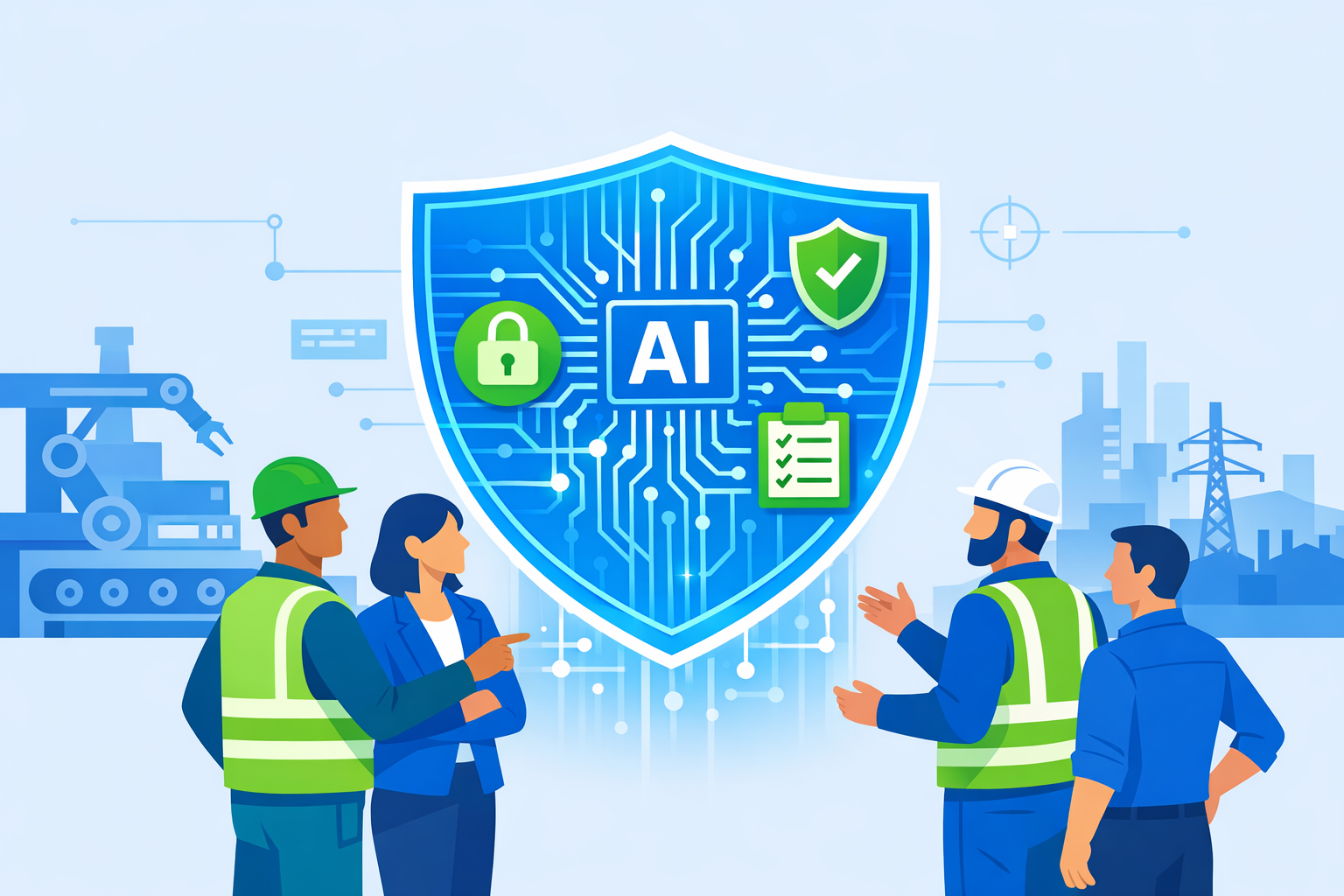
The framework's most operationally critical pillar for OT contexts is its insistence on maintained human judgment. AI can improve cybersecurity, but only when deployed within sound governance frameworks that keep human judgment at the center[7].
This is not a generic caution. In OT environments, AI and autonomous systems operating at the network edge introduce new dimensions of accountability - decisions once made by humans are now delegated to algorithms, raising questions about accuracy, transparency, ethics, and liability[4]. An automated response that isolates a network segment or triggers a shutdown sequence carries physical consequences that a misconfigured IT alert does not.
The WEF report explicitly warns that heavy reliance on AI can undermine cyber resilience, recommending that security teams combine AI with human judgment, simulate AI failures, and design fail-safes that keep operations functional during AI outages[9].
The Board Imperative: From IT Concern to Core Business Risk
The WEF framework states explicitly that cybersecurity accountability can no longer be delegated exclusively to the CISO or OT security team. The data illustrates why: only 32% of organizations monitor the security of their OT assets, only 20% have a dedicated OT security team, and only 16% of boards receive reports on OT security.
Industry observers note that the framework is likely to accelerate regulatory alignment. Building trust across borders was seen as essential for cyber resilience, requiring aligned frameworks and sustained public-private collaboration to balance privacy, sovereignty, and accountability[10]. Standards bodies and regulators are expected to reference the framework's principles in upcoming guidelines, raising the stakes for organizations that have not yet operationalized its recommendations.
For boards and CFOs, this means translating OT cyber risk into financial metrics: estimated downtime costs per incident, supply chain disruption penalties, regulatory exposure under NIS2 or sector-specific mandates, and the reputational cost of publicly reported OT breaches. Linking these figures to measurable improvement plans - and reporting them alongside other enterprise risk disclosures - is no longer optional positioning; it is the direction regulatory pressure is moving.
Practical Actions for OT Operators: A Six-Step Framework Response
The following sequence reflects the WEF framework's priorities as applied to industrial and OT environments, integrating the NVIDIA AI cybersecurity approach to critical infrastructure and workforce development insights from SANS 2026 OT cybersecurity workforce guidance:
Conduct an OT-specific AI security assessment. Map all AI-enabled tools operating across IT and OT environments. Evaluate each for model integrity, data provenance, access controls, and susceptibility to adversarial manipulation - before and periodically after deployment. Treat this as a lifecycle process, not a one-time gate.
Build a standardized OT risk register. Adopt a cross-functional register that maps cyber threats directly to OT assets - PLCs, HMIs, SCADA systems, edge devices, and cloud interfaces. Use a common taxonomy so IT, OT, and supply chain partners can communicate risk posture consistently.
Define human-in-the-loop escalation paths. Document decision rights and escalation procedures for AI-driven security alerts in OT contexts. Any automated response that can affect physical processes must have defined human authorization thresholds and override mechanisms.
Extend risk assessment to cloud and edge environments. AI models deployed at the factory edge or in cloud-connected environments introduce governance challenges around model versioning, data lineage, and access controls for inference endpoints used in industrial applications.
Quantify cyber risk in financial terms for the board. Translate OT cyber risk into business-impact metrics and link them to improvement roadmaps presented in board-level dashboards alongside CFO risk disclosures.
Invest in targeted OT cybersecurity workforce development. Addressing the cyber skills gap involves upskilling existing employees and fostering a culture of security awareness[6]. 54% of organizations identify a shortage of skilled talent as the primary barrier to AI adoption in cybersecurity, a figure that compounds OT exposure where specialist skills are already scarce.
FAQ
Q: Is the WEF AI cybersecurity framework a mandatory standard? The framework is not a binding regulation. However, it was produced in collaboration with Accenture and draws on insights from 105 representatives across 84 organizations and 15 industries[9]. Regulators and standards bodies are expected to reference it in upcoming guidance, giving it significant de facto weight in compliance planning.
Q: How does the framework differ from existing OT security standards like IEC 62443 or NIST CSF? Existing OT standards focus primarily on technical controls and architecture. The WEF framework specifically addresses the governance and accountability layer - board responsibilities, AI deployment lifecycle, human oversight, and financial risk quantification - making it complementary rather than duplicative.
Q: What is the most urgent first step for organizations that have not yet started? The data is clear: visibility is the foundational gap. Anomaly detection tools and AI-driven cybersecurity measures should be implemented to safeguard OT networks[6], but these require a current-state asset inventory first. Organizations should begin with a complete OT asset map before evaluating AI-enabled security vendors.
Q: How should manufacturers approach AI vendor selection under this framework? The framework recommends evaluating vendors against strong incident response capabilities, transparent model governance practices, and demonstrated experience in OT or industrial environments. Vendors should provide documentation on how their AI tools have been security-tested and how they support human oversight mechanisms.