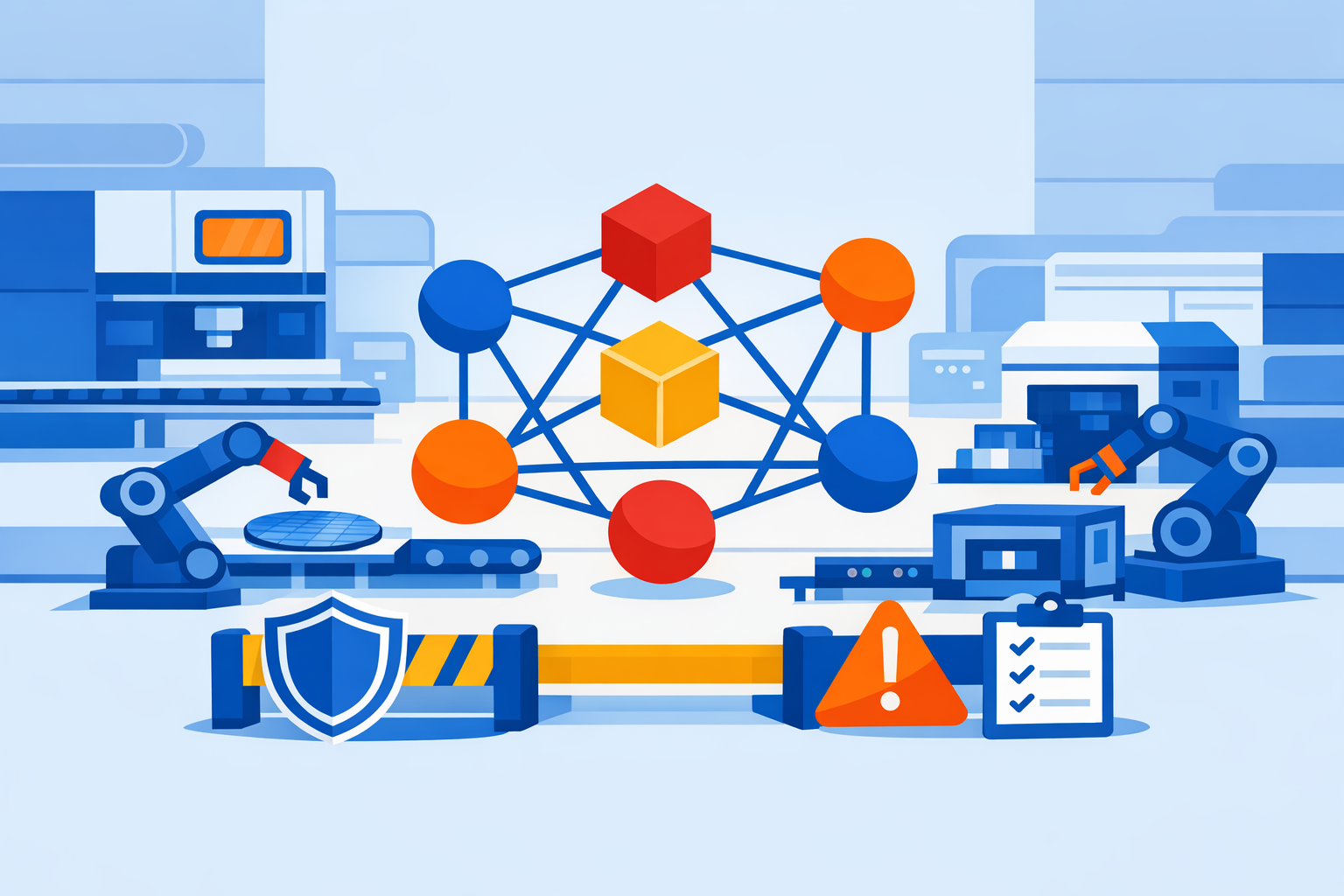
The semiconductor industry has entered a new phase of automation as agentic AI systems - autonomous, multi-agent architectures capable of executing multi-step fabrication decisions without direct human input - move from controlled pilots into active fab workflows, exposing significant gaps in governance, safety standards, and regulatory readiness.
As of early 2026, the semiconductor industry has reached a pivotal inflection point, shifting from experimental use of artificial intelligence to full-scale deployment of agentic AI, with autonomous agents managing end-to-end logistics and production workflows. As the industry pushes toward 2nm and 1.6nm process nodes, the complexity of chip design and fabrication has exceeded the limits of unassisted human cognition, prompting manufacturers to integrate multi-agent systems that coordinate everything from lithography scanner adjustments to global supply chain negotiations.
Background
Agentic AI - which decomposes AI into individual agents that collaborate on tasks - is emerging as a transformative force in chip manufacturing, with agents programmed using natural language to solve problems and improve efficiency autonomously. The semiconductor industry is on track for approximately 10% annual growth through 2030, with AI serving as the primary catalyst; by that year, roughly two-thirds of semiconductor demand will be AI-influenced, spanning data centers to edge devices embedded in everyday products.
Industry analysts predict that by 2028, AI agents will autonomously make 15% of all daily work decisions in semiconductor manufacturing and design. Early adopters such as Samsung Electronics and Intel reported 5-8% autonomous decision-making in their fab workflows in 2025. The convergence of autonomous execution, high-value processes, and sub-10nm precision fabrication has made governance and safety controls a priority concern for fabs scaling these deployments.
Governance Structures and Safety Controls
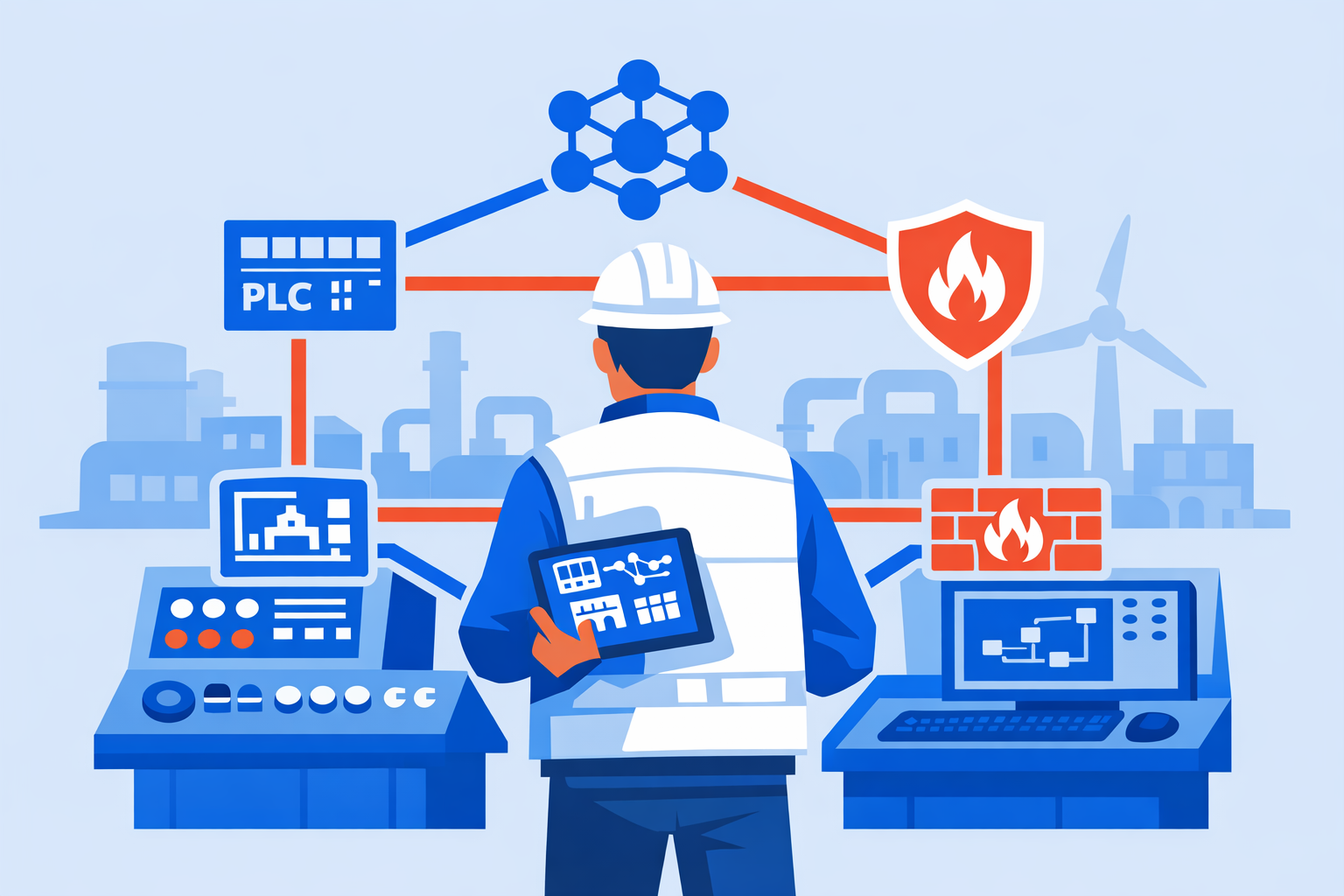
A prominent industry philosophy centers on "human governance with AI execution," establishing rules and guardrails that allow AI to automate up to 90% of analysis while engineers maintain oversight and control over outcomes. These systems are transforming smart manufacturing from a data-rich to a decision-rich environment, functioning as digital agents that sense, reason, negotiate, decide, and act across interconnected manufacturing processes - but critically operating within stringent safety and quality parameters.
Ensuring traceability and containing autonomous errors remain primary technical challenges. Semiconductor-specific workflows act as content and context guardrails, encoding best practices as reusable playbooks, providing transparency into how results are achieved, and helping prevent hallucinations that can occur when large language models (LLMs) operate without domain constraints. Agentic tasks are executed using scalable analytics workflows that engineers can view, save, and modify at any time, ensuring full transparency of AI actions.
Effective safety frameworks include continuous risk monitoring, sandboxed deployment environments for testing new capabilities, and robust fail-safe mechanisms such as kill switches and behavior throttling. Organizations are implementing staged deployment processes that gradually increase agent autonomy as safety confidence grows.
For data sovereignty - a critical concern in competitive semiconductor manufacturing - fully air-gapped, on-premises LLM infrastructure options exist, designed to ensure intellectual property sovereignty so that sensitive yield data and proprietary models never leave secure firewalls.
Regulatory and Standards Readiness
The regulatory landscape for agentic AI in high-stakes industrial settings remains fragmented. The EU AI Act has established comprehensive requirements for autonomous systems, while international standards bodies including ISO/IEC are developing governance frameworks that will shape how organizations worldwide approach AI deployment. The EU AI Act entered its phased implementation period, with obligations for general-purpose AI (GPAI) models taking effect in August 2025.
The EU AI Act sets maximum penalties of €35 million or 7% of global annual turnover for certain violations - a strong incentive to embed oversight, logging, and evaluations into agent pipelines from the outset rather than as afterthoughts. Frameworks such as the NIST AI Risk Management Framework provide a practical structure covering GOVERN, MAP, MEASURE, and MANAGE functions, helping teams define roles, operationalize mitigations, and translate policy into engineering work.
Courts have not yet issued definitive rulings allocating liability for fully autonomous agent behavior. Organizations should review vendor contracts for AI agents to ensure indemnification clauses specifically address autonomous actions and errors resulting in operational loss.
Workforce Impact and the Path Forward
Beyond technical implications, autonomous AI in semiconductor workflows addresses a critical talent shortage; by early 2026, estimates suggested a global deficit of more than 146,000 semiconductor engineers. Agentic AI enables a single engineer to act as an orchestrator for a team of digital workers, effectively amplifying individual productivity.
Industry guidance calls for developing dashboards for human oversight, embedding compliance checks, and integrating supervisory controls within agentic AI workflows, alongside targeted workforce training to enable employees to collaborate effectively with advanced AI systems.
Future developments are expected to focus on higher levels of end-to-end autonomy in chip design and fabrication, though significant challenges remain - particularly in ensuring interoperability of agents from different vendors and maintaining absolute data privacy in multi-agent environments. Agentic AI systems that act rather than simply answer will stress-test existing "human oversight" rules in 2026, pressing fab operators and standards bodies alike to close governance gaps before autonomous operations reach critical process thresholds.