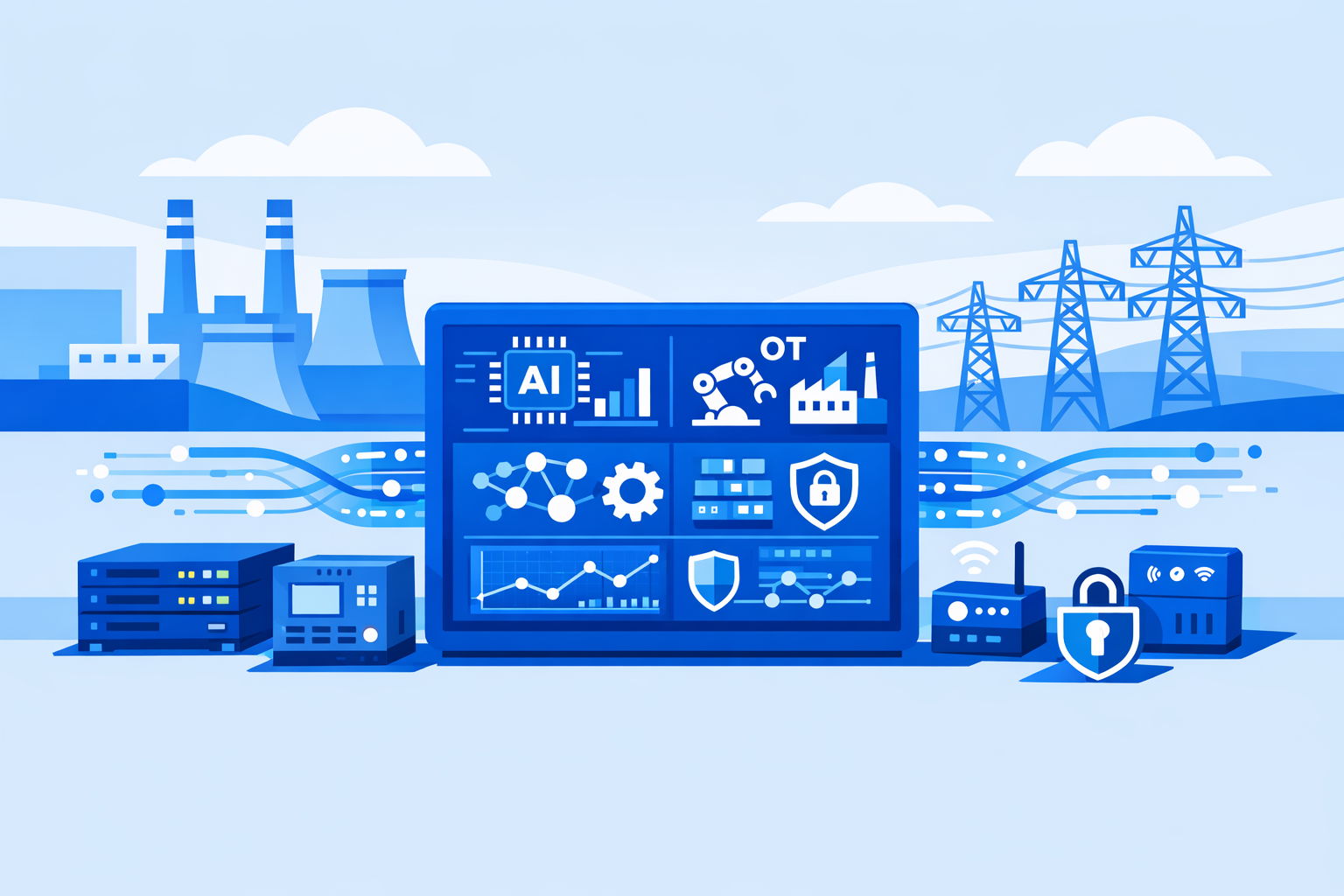
Siemens announced significant expansions to its Industrial Edge ecosystem at Hannover Messe 2026 on April 22, 2026, releasing a generally available Industrial AI Suite and enhanced OT cybersecurity capabilities aimed at accelerating IT/OT convergence across manufacturing and critical infrastructure sectors.
The announcements, made in Hannover, Germany, include the general availability of the Industrial AI Suite built on the Industrial Edge platform, alongside the WinCC Unified supervisory control and data acquisition (SCADA) system. The moves reflect a strategic push by Siemens to consolidate edge-native AI processing, distributed SCADA, and certified security into a single scalable platform as demand grows for on-premises, low-latency analytics in industrial environments.
Background
The Industrial Edge platform, part of Siemens' broader Industrial Operations X portfolio, has been progressively repositioned as a convergence layer between operational technology (OT) and enterprise IT networks. The latest expansion arrives as manufacturers face mounting pressure to process machine data closer to the source-reducing reliance on cloud round-trips that introduce latency into time-critical control loops. OT cybersecurity concerns have also escalated sharply, with threat actors increasingly targeting industrial control system networks through credential misuse and insufficient network segmentation, a trend covered in detail in earlier analyses of ICS incident trends and OT network segmentation practices.
Industrial Edge Management version 2.0 now supports additional hypervisors including OpenShift and Hyper-V, enabling the platform to operate on existing IT infrastructures. This hypervisor support is significant for multi-vendor environments where OT and IT teams manage divergent virtualization stacks.
Details
The Industrial AI Suite simplifies the entire AI lifecycle, enabling organizations to deploy, scale, and manage AI models across multiple locations. It targets use cases including predictive maintenance and visual inspection. The latest version enables more effective AI model retraining by allowing customers to combine image data with production data from MES systems or controllers-a capability that closes the feedback loop between quality outcomes and model accuracy without requiring data to leave the production site.
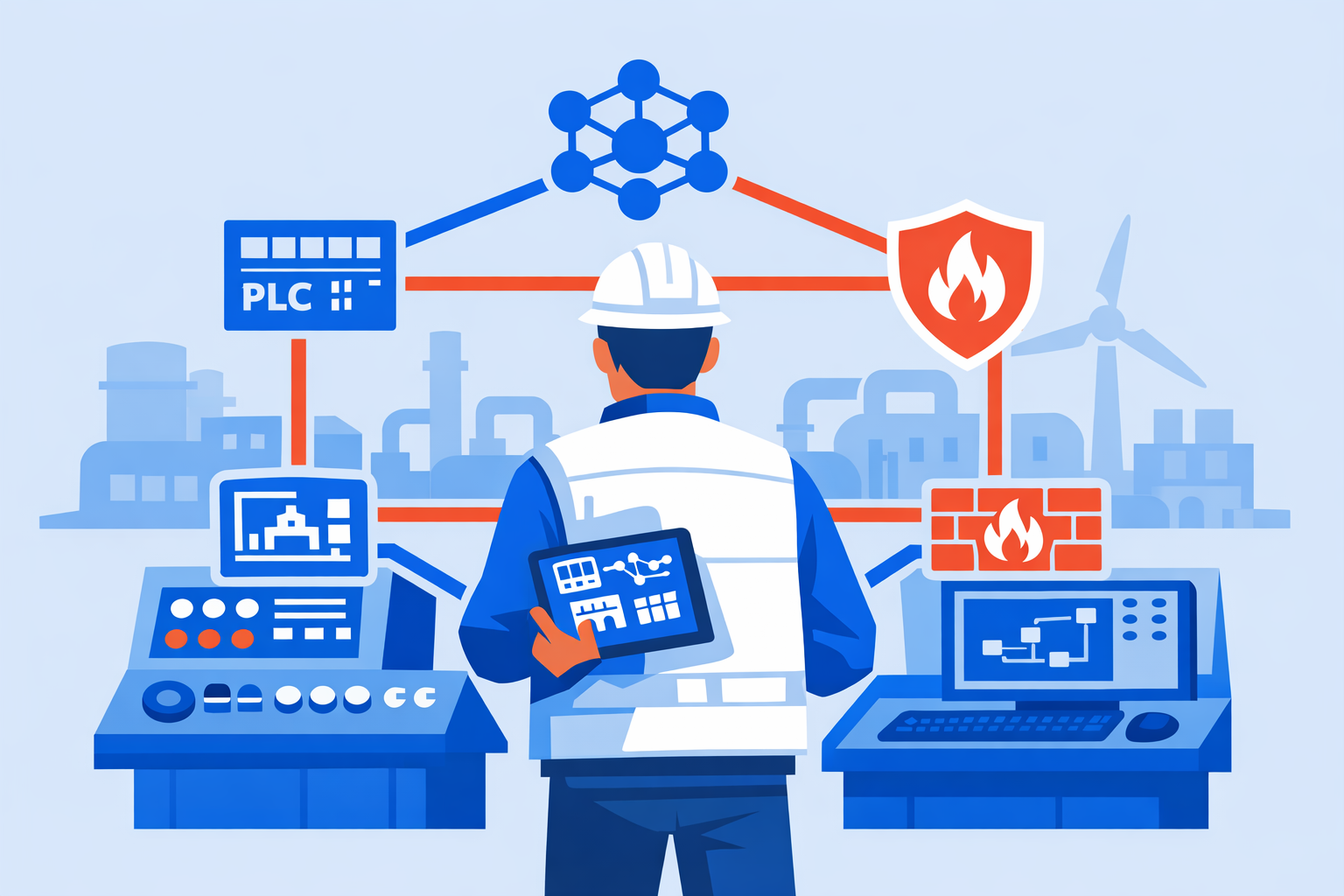
WinCC Unified is now generally available as a decentralized SCADA solution on Industrial Edge, while WinCC Open Architecture has been released as an Edge App and for the virtual PLC SIMATIC S7-1500v. This decentralized SCADA architecture reduces dependence on centralized servers, an approach consistent with the zone-and-conduit segmentation models promoted under the IEC 62443 standard.
On data management, the Industrial Information Hub now enables bidirectional data flow, allowing data models to synchronize in parallel between edge devices and central IT systems. The updated hub is compatible with ARM-based devices such as the SIMATIC IOT2050, with LTE-based wireless networking planned for a future release, extending deployment viability to logistics, water management, and renewable energy applications.
On cybersecurity, UL Solutions awarded Siemens Industrial Edge and its virtual PLC the "Smart Systems Verified - Platinum" certification, evaluating six categories: connectivity and interoperability, control and automation, digital experience, functional value, resilience, and cybersecurity.
Dr. Horst J. Kayser, CEO Factory Automation at Siemens Digital Industries, stated the platform delivers "greater operational flexibility, simplified IT/OT integration and certified security for critical operations - all from one scalable platform".
On the ecosystem front, Siemens added partners including 36Zero Vision, MVTec, and Basler for machine vision and quality inspection, and OnLogic for rugged industrial PCs compatible with Industrial Edge in oil and gas and remote manufacturing environments.
Outlook
IEC 62443-4-2-certified security functions for critical infrastructure, including air-gapped operation in which systems are physically isolated from external networks, are targeted for release in the second half of 2026. That certification milestone will be closely watched by operators in regulated sectors such as energy and water, where compliance with industrial security standards is a procurement requirement. The platform's expanding hypervisor and ARM device support also positions it to compete in multi-vendor edge deployments where interoperability-rather than a single-vendor stack-is the design constraint, a dynamic also emerging in the MES-driven OT/IT integration space highlighted at this year's Hannover Messe.